
Last updated November 15, 2026
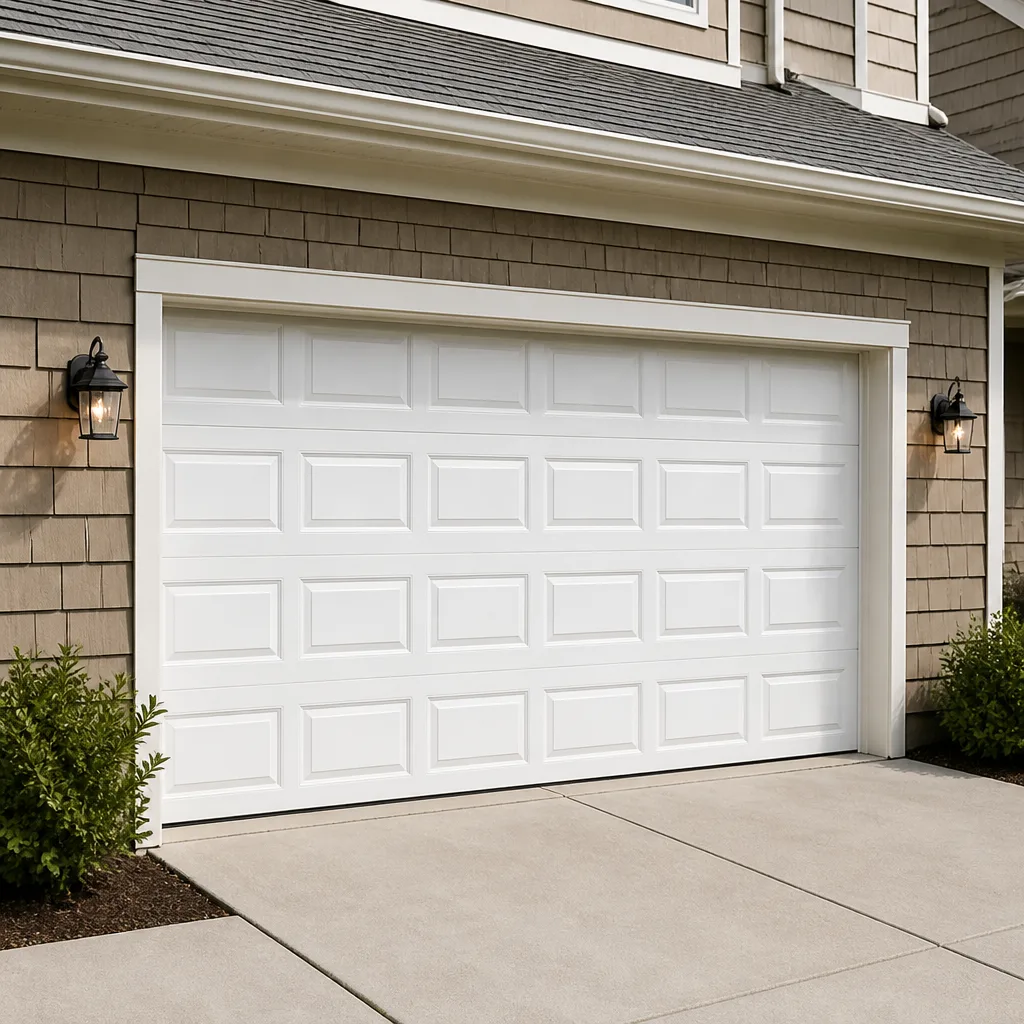 Raised-panel steel
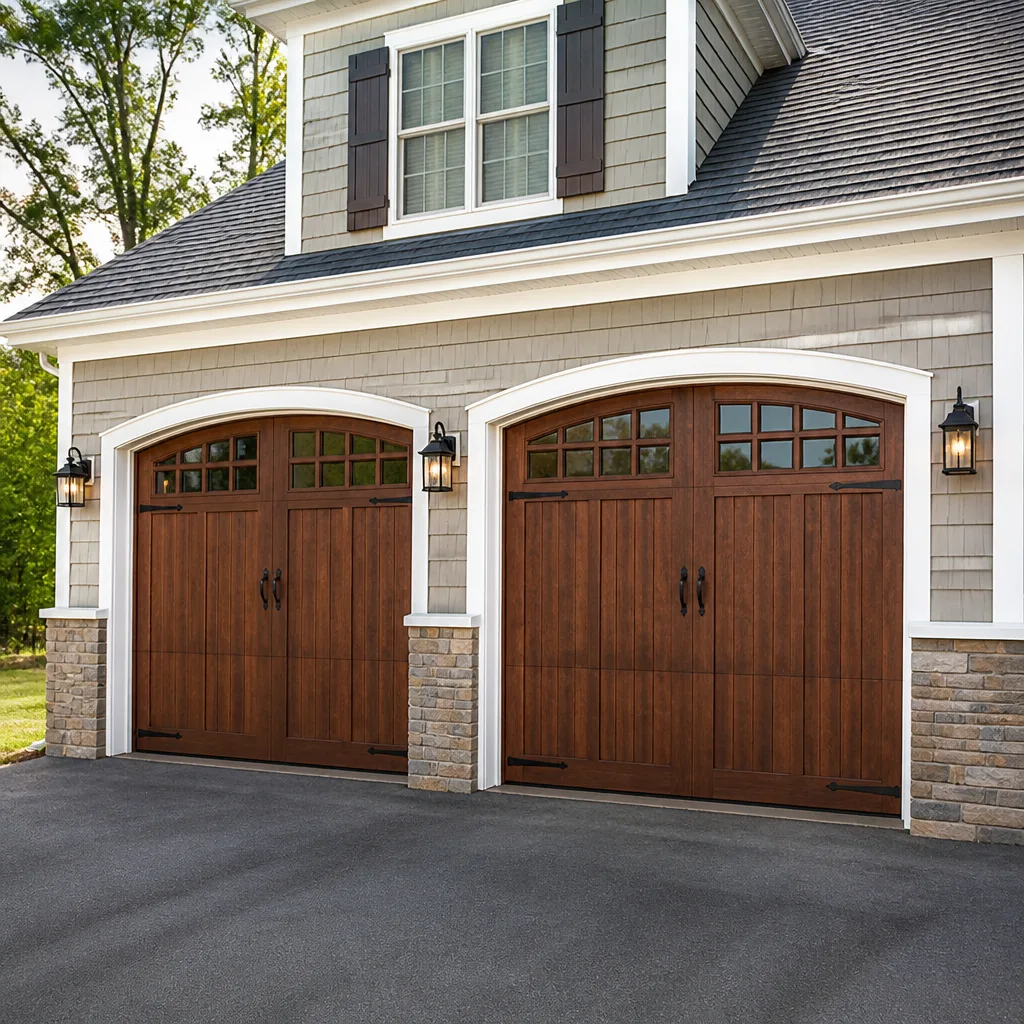 Carriage house
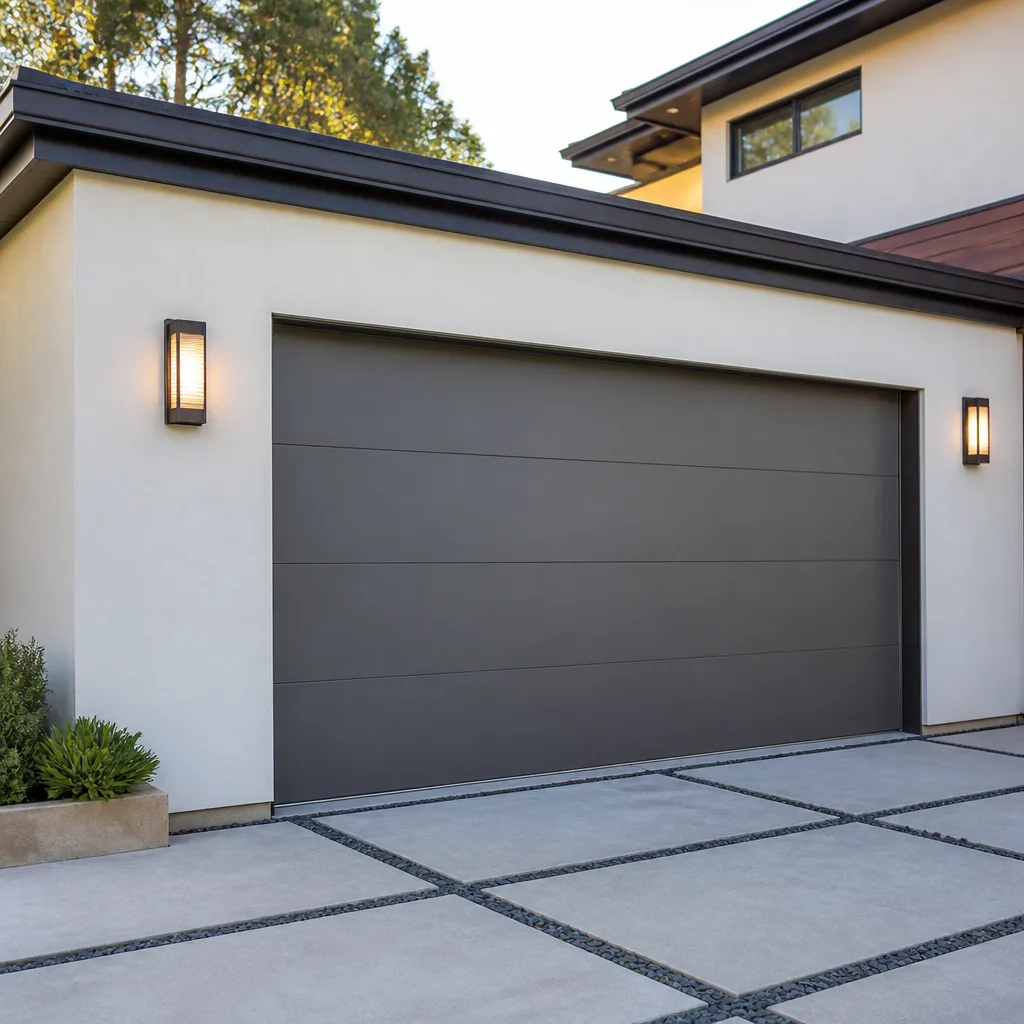 Modern flush
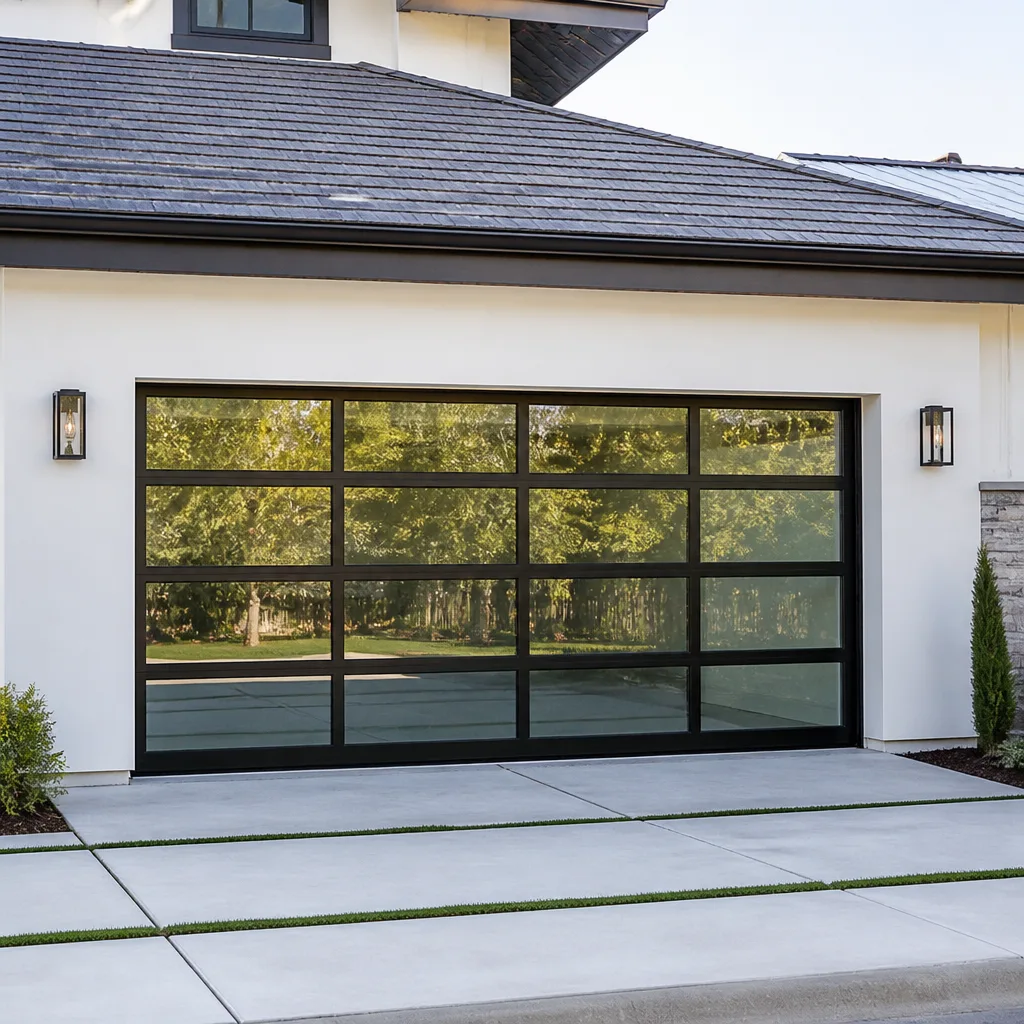 Full-view glass
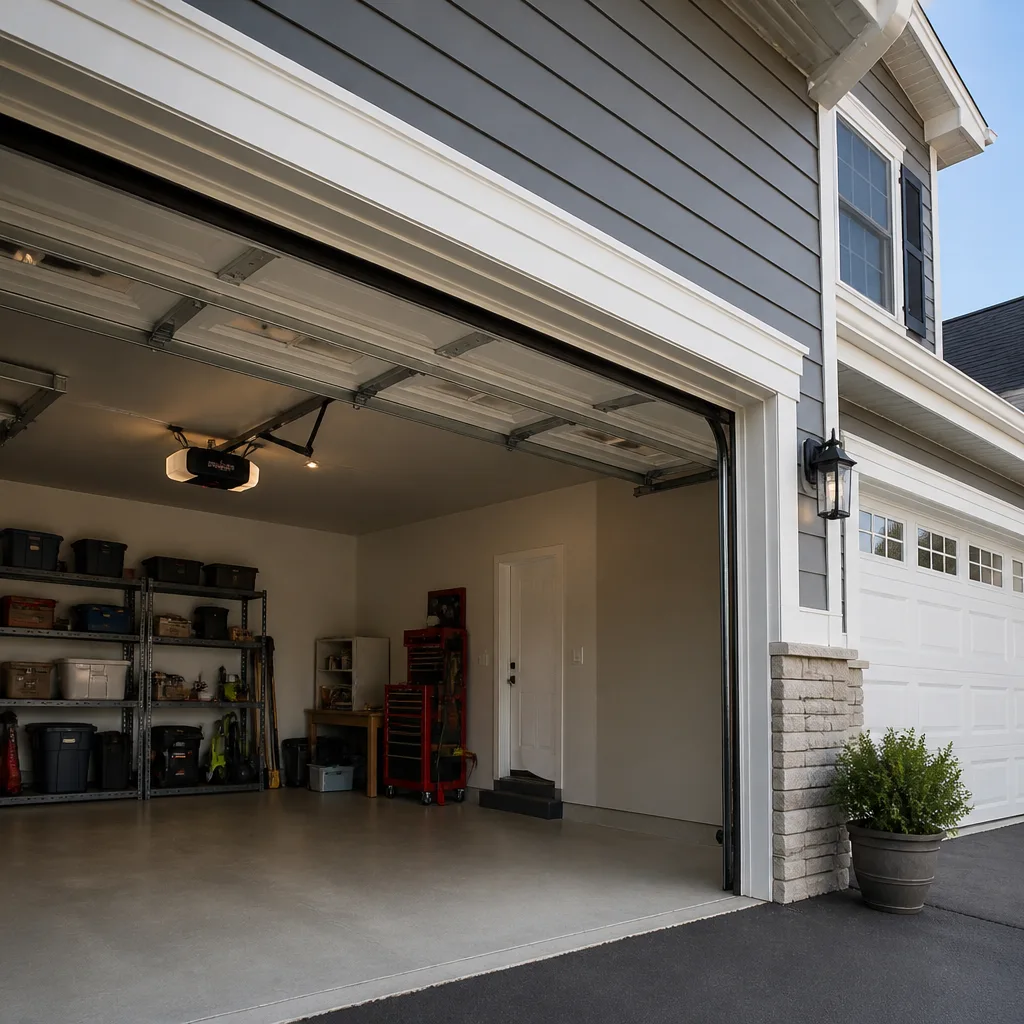 LiftMaster openers
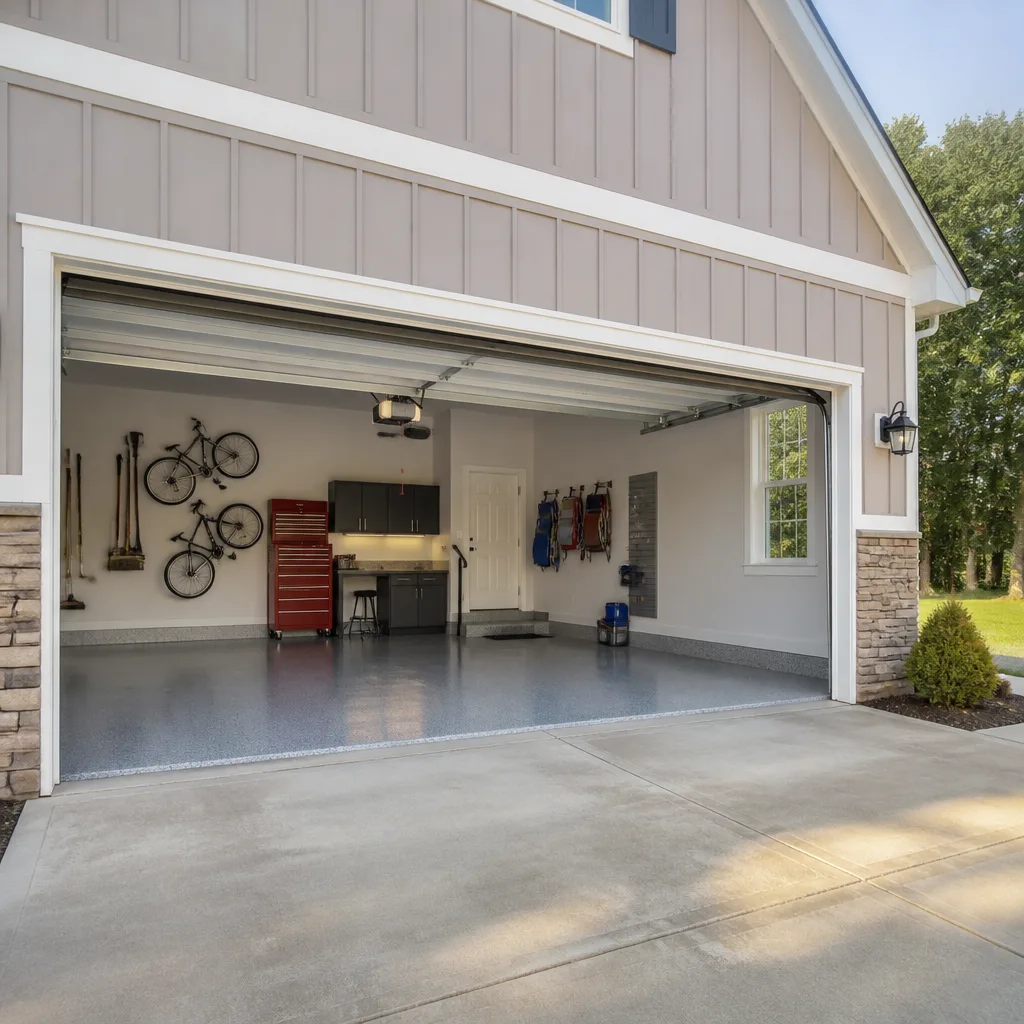 Chamberlain openers
Full 25-point door and opener safety check with every visit - springs, cables, rollers, tracks, and your LiftMaster or Chamberlain opener included
You get a price before we start. It does not change when the pro arrives.
Get your free estimateThe Complete Guide to Garage Doors in North Charleston
The national average for garage door replacement gets quoted everywhere, and it’s a misleading number for anyone living in North Charleston. That figure was calculated without weighing what Lowcountry humidity, hurricane-season wind loads, and coastal building requirements actually do to a door over its service life. A steel door that performs well in a dry climate can show rust at the hardware within a few years near the harbor and tidal marshes. This guide maps every decision – material, insulation, opener, and brand – to the specific conditions of living here. By the end, you’ll know what to look for, what questions to ask, and when to call a professional.
Quick Answer
Garage door decisions in North Charleston come down to three priorities: rust-resistant hardware for the humidity, a wind-load rating that meets coastal building requirements, and an opener sized correctly for the door’s weight. Materials like steel with galvanized components, proper insulation for summer heat, and brands such as Clopay, LiftMaster, and Amarr tend to hold up best here. The right choice depends on your home’s age, your door’s exposure, and whether you’re repairing or replacing.
Styles & brands we work with
- Raised-panel steel
- Carriage house
- Modern flush
- Full-view glass
- LiftMaster openers
- Chamberlain openers
Table of Contents
- Why Conventional Garage Door Advice Falls Short in North Charleston
- How the Lowcountry Climate Shapes Material Choice
- Wind-Load Ratings and What Actually Meets Coastal Requirements
- What Brands Are Commonly Installed in North Charleston
- Why Insulation Matters More for Cooling Than Heating Here
- Opener Systems: The Most Failure-Prone Component
- The Full Lifecycle Cost: Purchase Price vs. Ten-Year Ownership
- Repair or Replace: How to Decide
Why Conventional Garage Door Advice Falls Short in North Charleston
Most garage door guides are written for a national audience, and quiet assumptions in them don’t hold in North Charleston. Humidity, temperature swings, and proximity to tidal water change what a door needs year to year. We’ve seen doors here that look fine from the street but have rust creeping through hinges and rollers within a few seasons. That’s not a defect. It’s the environment doing exactly what you’d expect.
North Charleston sits between the Charleston Harbor and the area’s tidal marshes, which keeps the air humid for most of the year. Metal hardware, springs, and hinges are in constant contact with moisture that never fully dries out. Where a homeowner in a dry climate might replace springs every seven or eight years, a homeowner near the water may see them go sooner. The good news is that this is predictable, and you can plan around it.
Housing also varies widely. North Charleston runs from 1970s ranch homes to new subdivisions with modern construction standards. A door and opener on a 1975 home have different requirements from what a builder installed last year. Older doors may have undersized openers, mismatched springs, or hardware that should have been replaced years ago. Newer homes may have builder-grade doors that technically work but weren’t chosen for the climate.
This guide is written from the perspective of a business that works on Rainier Garage Door Repair systems every week across North Charleston’s neighborhoods. We repair, service openers, and install new doors, so we see the full cycle. That perspective shapes what we recommend: not always new, not always the cheapest, but built to hold in this climate.
How the Lowcountry Climate Shapes Material Choice
In North Charleston, material choice is the first and most consequential decision. Steel doors remain the most common choice because of their cost and durability, but the finish matters as much as the core. A standard painted steel door may look fine initially, but if the hardware isn’t galvanized or otherwise rust-resistant, you’ll notice it within a couple of years. We work on plenty of these doors, and the pattern is consistent: hinges, rollers, and track hardware fail before the door itself does.
Here’s what holds up in this climate:
- Galvanized steel hardware: Hinges, rollers, brackets, and track components coated to resist rust. This isn’t optional here – it’s the baseline.
- Rust-resistant finishes: Powder-coated or factory-finished steel with bonded coatings outlast touch-up paint by years. When the finish fails, the rust starts.
- Aluminum doors: Naturally rust-free and often a good choice for homes closer to the water. Weight and insulation are the trade-offs.
- Wood doors: Beautiful but demanding here. Wood needs regular sealing and refinishing, and without that, it moves and warps in the humidity.
- Composite or fiberglass: Growing in popularity because they resist moisture without the maintenance of wood. They won’t rust, and they hold their finish longer than steel in damp conditions.
What we tell homeowners is simple: the door you choose should survive ten years of Lowcountry air. If the hardware isn’t protected against rust, you’ll be replacing parts long before the door wears out. That’s the cost of a decision made on national advice rather than local conditions.
Wind-Load Ratings and What Actually Meets Coastal Requirements
South Carolina’s coastal building requirements include wind-load ratings for garage doors in many parts of the region. Not every door marketed as “wind-rated” meets those requirements for North Charleston’s specific zone. A door can carry a wind-load label and still fall short once you check its stated rating against what the local building department requires for your address. The label is a starting point, not a guarantee.
Wind-load ratings describe how much pressure a door can withstand without structural failure. In practice, that means reinforced panels, heavier-gauge track, and stronger hinges. Doors that meet higher ratings use all of these. Doors that don’t tend to have thinner panels and standard tracks – they may look identical to the untrained eye. The difference shows up during a real storm, or when you try to submit a permit application and the inspector checks the rating.
Here’s how to get this right:
- Ask the building department what rating applies to your address. Rating requirements can vary by zone and construction type, so don’t guess.
- Request the manufacturer’s wind-load documentation for any door you’re considering before you order.
- Check the installation requirements, not just the door. A rated door installed with standard brackets and tracks may not perform as rated.
- Plan for the hardware as well as the panels. Reinforcement matters at the hinges, the track, and the center of the door.
If you’re replacing an older door in North Charleston, this is exactly the conversation worth having before you buy. We can walk through what the manufacturer’s documentation says and help you match the door to the requirement. If you need garage door repair on an existing door instead, we’ll tell you whether reinforcement is worth doing or whether replacing the door makes more sense.
What Brands Are Commonly Installed in North Charleston
Walk through most North Charleston neighborhoods and you’ll see a handful of brands repeated across homes: Clopay and Amarr on newer builds, with Wayne Dalton appearing regularly on mid-century and 1980s homes. That matters because parts availability and familiarity with the specific door system save time and money. When we know the brand, we know the failure points, the correct replacement parts, and the quirks that show up during a repair.
Brand familiarity makes a difference in three concrete ways:
- Faster diagnosis: If your door is a Clopay or Amarr, we know how the springs, hinges, and panels are configured before we arrive.
- Parts availability: Common brands are easier to source parts for, which reduces the wait when a component fails.
- Consistent service across life stages: Whether the need is a spring, a panel, or a full replacement, we can handle the whole job rather than sending you to a different contractor.
Brand isn’t everything – installation quality matters just as much as what name is on the door – but it’s a useful guide. If you don’t know your door’s brand, the label is usually on the inside of the bottom panel or on the opener. If your opener is a LiftMaster, Chamberlain, Genie, or Craftsman, we can look up the model and match it to the right repair.
Why Insulation Matters More for Cooling Than Heating Here
In North Charleston, the insulation question flips. Up north, insulation keeps heat in through cold winters. Here, it keeps heat out through long, humid summers. An insulated garage door isn’t about surviving January. It’s about keeping the space behind it usable – whether that’s a laundry room, a workshop, or just the wall between your garage and the rest of the house.
Mild winters mean you can sometimes get away with an uninsulated door, particularly on a detached garage. But if any part of the garage shares a wall with conditioned space, you’ll feel the difference. A hot garage in July pushes heat into the adjacent rooms, and an uninsulated door does nothing to stop it. An insulated door also helps reduce condensation on the door’s inner surface, which is one of the quiet causes of rust in this climate.
A few practical points:
- Insulated doors cost more up front but typically save on cooling costs over their service life.
- Two-layer and three-layer doors both offer insulation; three-layer doors add a steel core that helps with wind-load and durability.
- Polyurethane insulation usually outperforms polystyrene, though it costs more.
- Insulated doors are quieter, which matters if a bedroom is above or next to the garage.
If your garage is a detached, unconditioned space used only for parking, the insulation decision is mostly about noise and rust control rather than energy savings. If your garage shares walls with your living space, insulation is closer to a necessity. We can talk through the trade-offs for your specific home.
Opener Systems: The Most Failure-Prone Component
The opener is usually the first part of a garage door system to fail. It takes more wear than the door itself because it does the work of lifting and lowering. In North Charleston’s humidity, circuit boards, motor windings, and connections can degrade more quickly, so opener problems show up here alongside door problems. That’s why we treat garage door opener repair as its own specialty rather than a tag-on service.
Common brands you’ll see in North Charleston include LiftMaster, Chamberlain, and Genie, all of which are common on modern installs. Each has its own failure patterns. Some LiftMaster units develop board issues after years of use. Chamberlain openers often develop travel-limit problems. Genie units can struggle with belt tension. Knowing the brand tells you where to look first.
What typically fails first:
- The logic board: Takes the most electrical wear and is the priciest part for most openers.
- The logic board: Handles motor control and safety sensors; heat and humidity accelerate wear.
- Belts and chains: Wear out gradually and usually give warning before they go.
- Safety sensors: Misalignment is common and easy to fix; sensor failure is less common and usually electrical.
- Gears: Become brittle with age and heat, especially on older units.
Before replacing an opener, we look at its age and the cost of the fix. An eight-year-old opener with a bad logic board may not be worth repairing. A three-year-old unit with a misaligned sensor is usually a quick fix. Our technicians have up to 13 years of experience with these systems, and part of the job is telling you honestly whether the repair is worth doing.
The Full Lifecycle Cost: Purchase Price vs. Ten-Year Ownership
It’s tempting to compare garage doors on purchase price alone. That number doesn’t capture what a door actually costs to own in North Charleston. Humidity, wind-load requirements, and the maintenance demands of different materials turn the ten-year cost picture upside down. A cheaper door that needs new hardware every few years can cost more than a higher-priced door that holds up. Here’s how the math usually shakes out.
- Uninsulated steel door, standard hardware: Lowest purchase price. Higher likelihood of rust damage to hinges and rollers, and likely multiple hardware replacements across a decade.
- Insulated steel door, galvanized hardware: Higher purchase price. Better wind-load performance and far less rust risk, with fewer repair bills across the same period.
- Aluminum door: Mid-to-high purchase price. No rust risk, though insulation performance and weight need to be matched to the opener.
- Wood door: Beautiful but demands refinishing at least once every few years to resist moisture. Skipping the maintenance shortens the door’s life considerably.
The opener matters too. A builder-grade opener may last less time than a higher-quality model, so a replacement partway through a decade adds to the total. The most economical decision usually isn’t the cheapest door on the shelf – it’s the door and opener combination that needs the least maintenance in this climate. That’s the answer a national average can’t give you.
Repair or Replace: How to Decide
When a garage door starts acting up, the first decision is whether to repair or replace. There’s no single right answer, but there is a consistent set of questions that lead to one. In our experience, most North Charleston homeowners can reach a confident decision by answering three or four of them honestly.
Work through this list:
- How old is the door? Steel doors typically last 15-20 years with proper maintenance; wood doors need more frequent refinishing to reach that range.
- How extensive is the damage? A single spring, roller, or hinge is a repair. Multiple rusted panels, a bent track, and a failing opener together often point to replacement.
- Is the door meeting its wind-load requirement? An older door that doesn’t meet current ratings is a candidate for replacement, especially if you’ve had other upgrades done.
- How much is the repair relative to replacement? Two or three repairs adding up to a big share of a new door’s cost usually point toward replacing.
- Is the door visually dated in a way that matters to you? That’s a preference question, but it belongs in the conversation.
We tell homeowners what we’d do if the door were on our own house. If a repair makes sense, we’ll do it. If a repair is throwing money at a door that’s already at the end of its life, we’ll say so and walk through what a replacement involves. The decision is yours, but you shouldn’t have to guess at it.
Common Mistakes to Avoid
- Choosing a door on purchase price alone. In North Charleston’s humidity, the cheapest door often costs more across ten years because hardware fails faster. Look at rust resistance and wind-load performance, not just the sticker price.
- Ignoring the finish on hardware. A door can have a great paint job and cheap, unprotected hinges and rollers. When you inspect a door, look at the hardware, not just the panels.
- Assuming “wind-rated” means it meets local requirements. Check the manufacturer documentation against what the building department requires for your address. The label on the door isn’t the whole answer.
- Skipping a permit conversation. Most cities require a permit for garage door replacement, so ask the building department what applies before work starts. Skipping that step can cause trouble later.
- Buying an opener without checking the door’s weight. An opener sized for a lighter door can strain or fail if paired with a heavier one. Match the opener to the door, not the other way around.
- Letting small rust spots become big ones. A few rusted hinges replaced early are cheap. Ignored, they spread to the track and add up to track replacement. Check the hardware once or twice a year.
- Choosing a contractor without asking about the brand. Familiarity with Clopay, LiftMaster, Amarr, and similar brands makes a real difference in diagnosis speed and parts availability.
See the difference
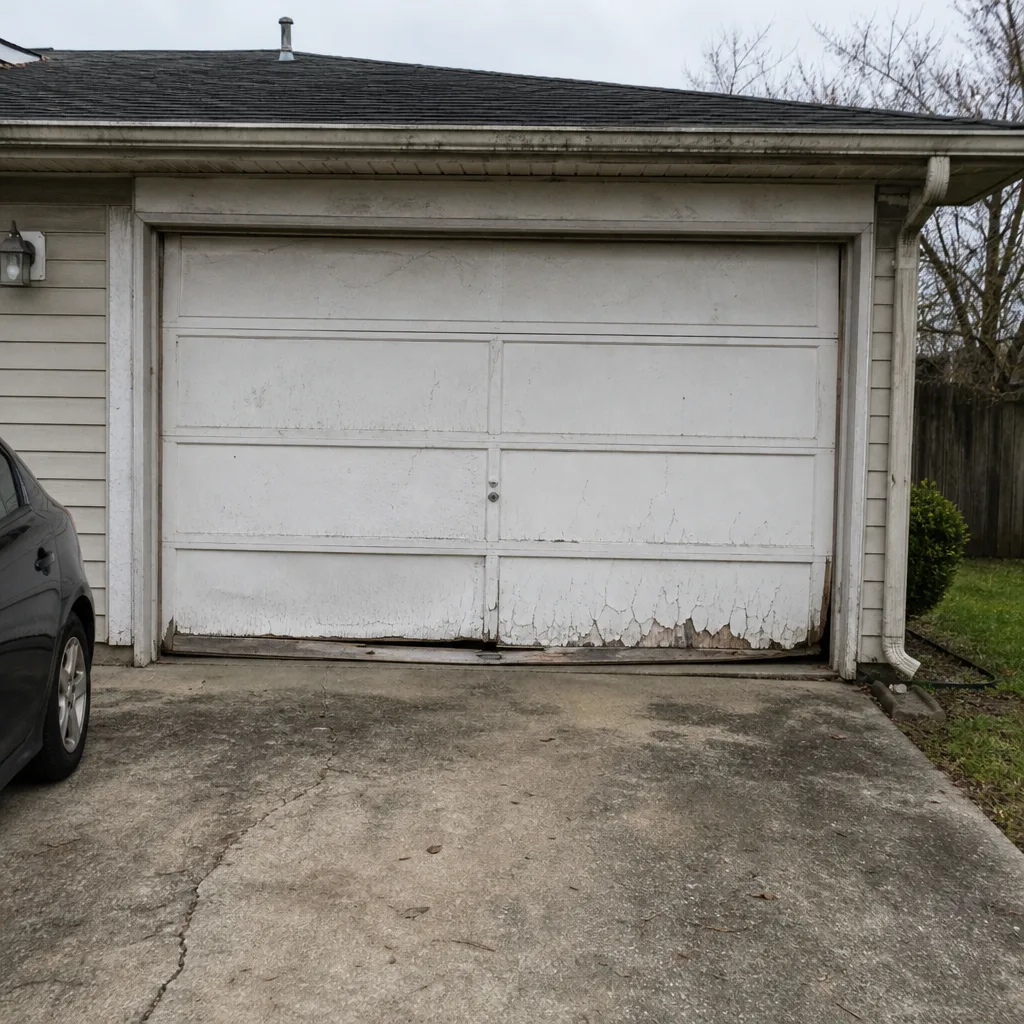 Before
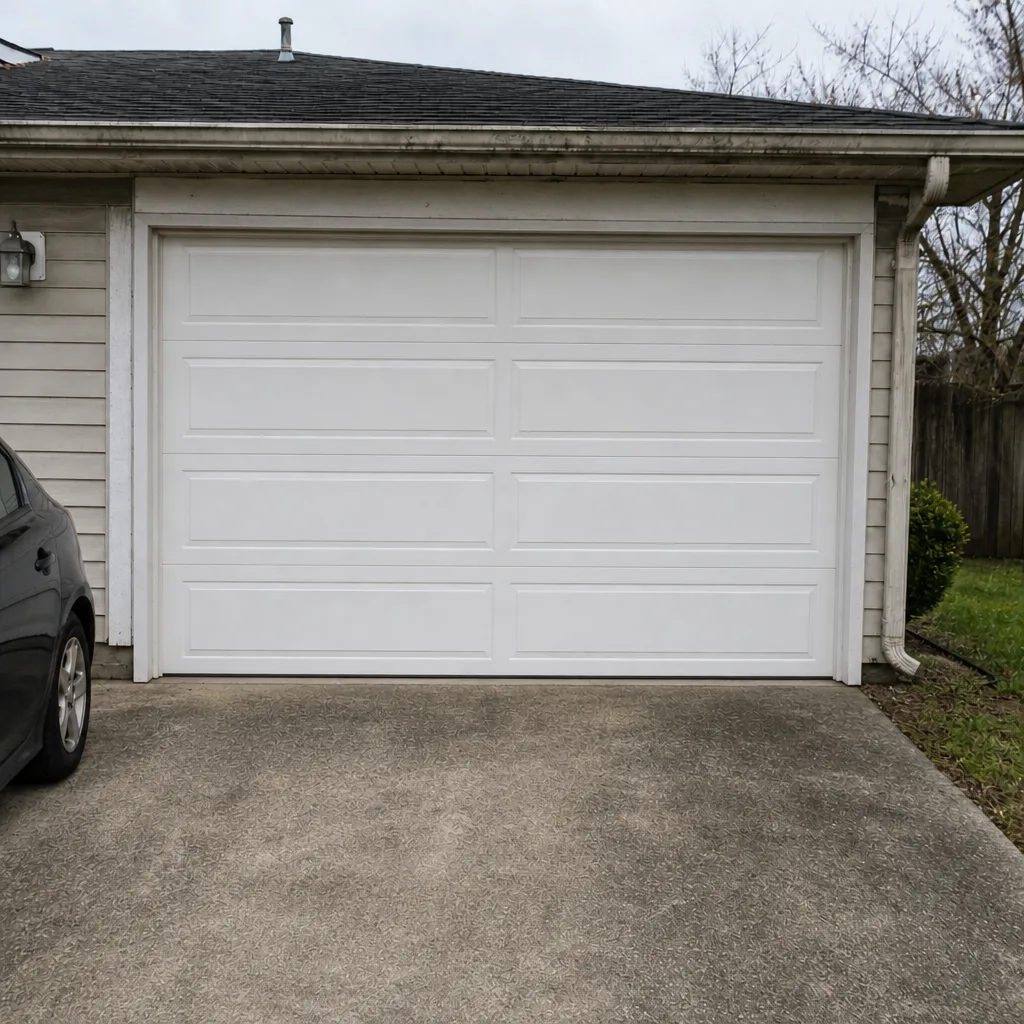 After
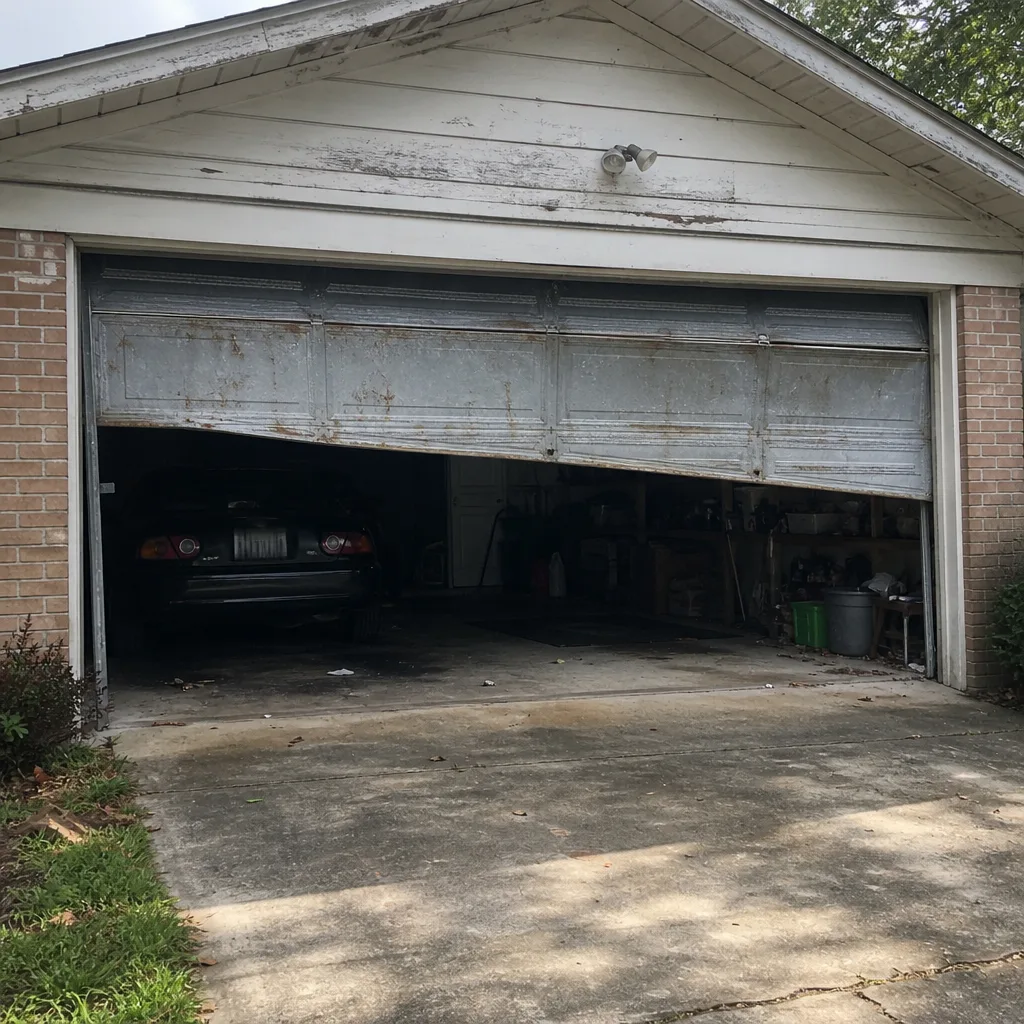 Before
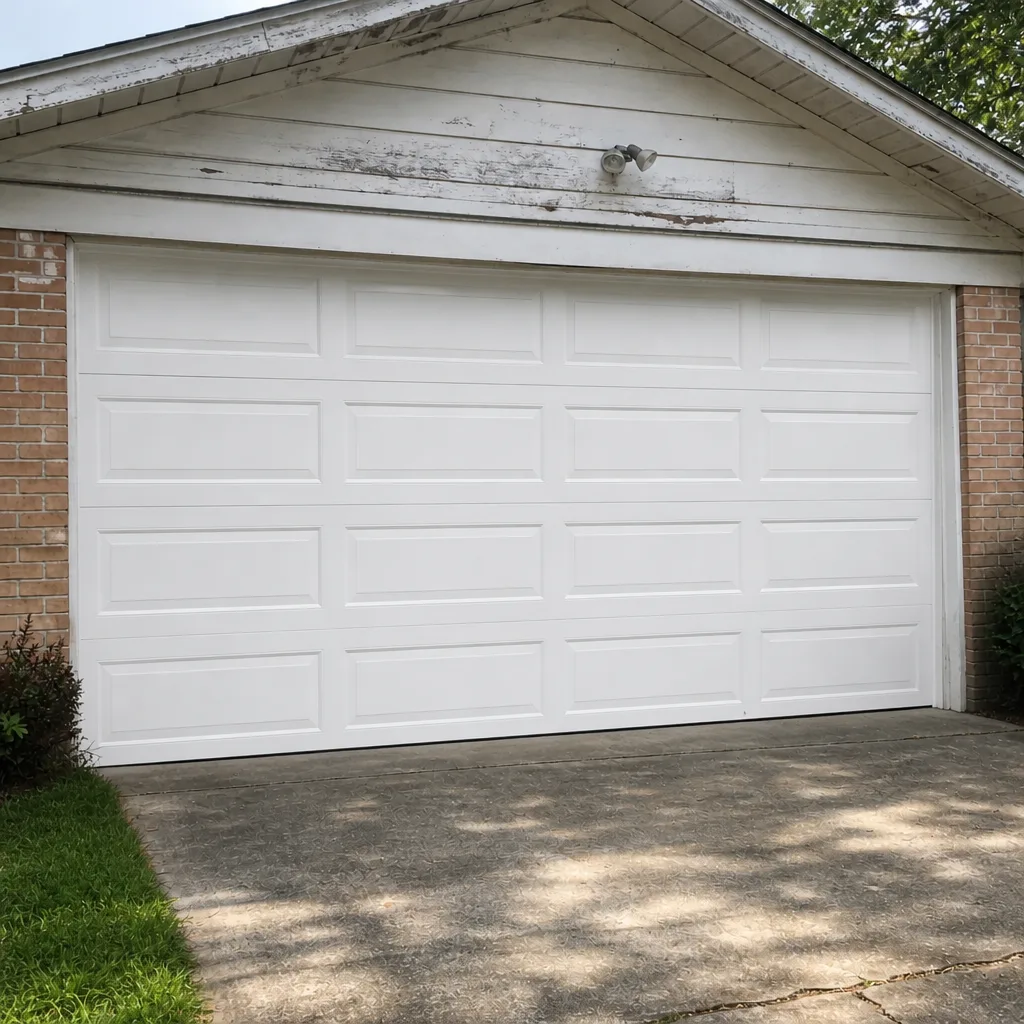 After
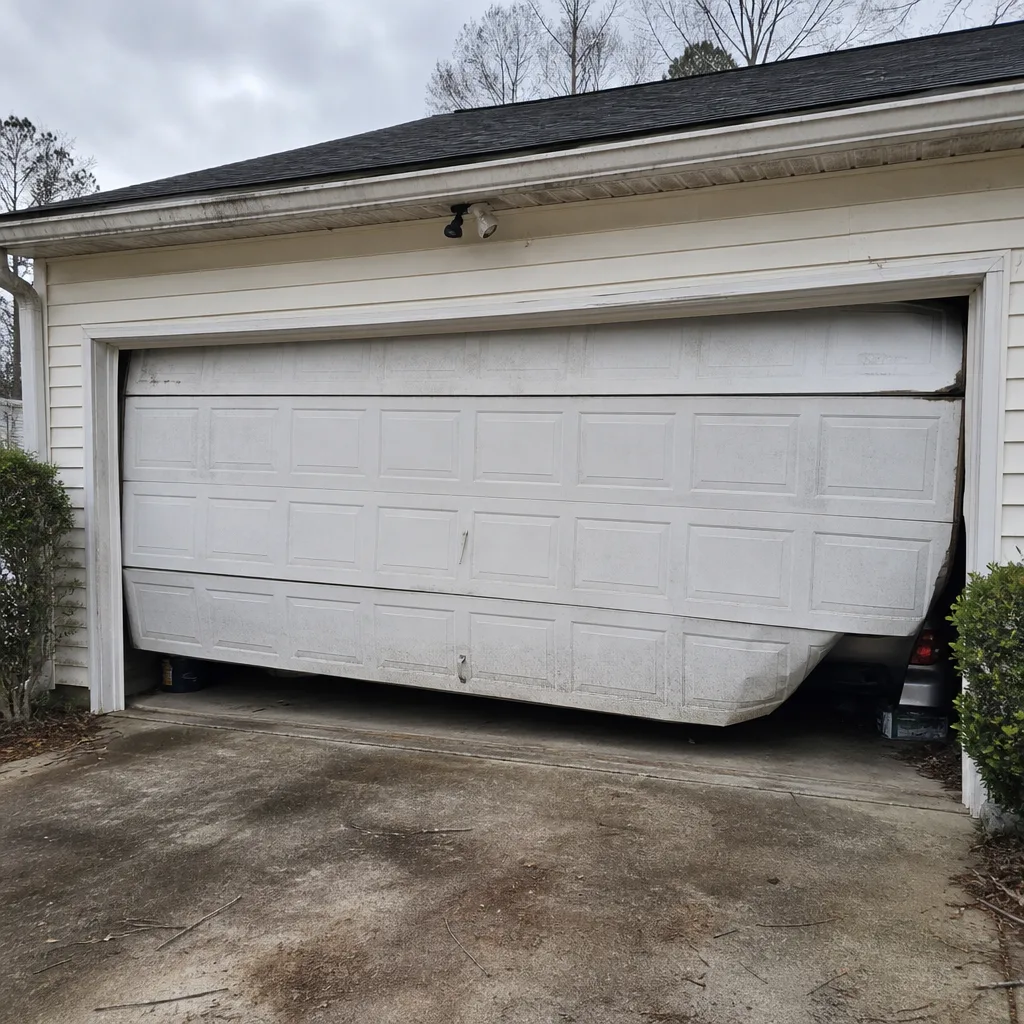 Before
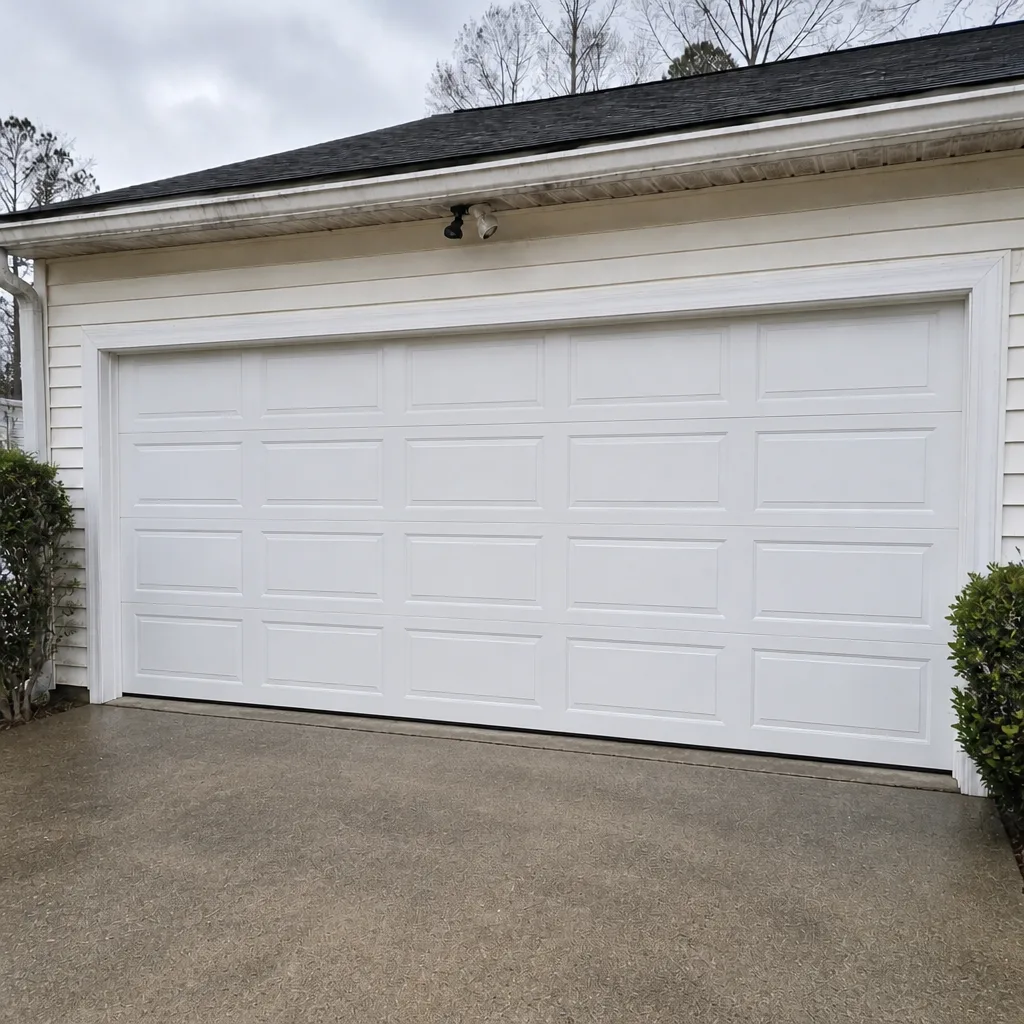 After
When to Call a Professional
Some garage door issues are safe to handle yourself – replacing a remote battery, clearing an obstruction from the sensor beam, or cleaning the track with a damp cloth. Others are worth a call. Springs and cables are under high tension, and a mistake can cause serious injury; those jobs should always go to a trained professional. Electrical work inside an opener, including logic board replacement, carries similar risk. If the door won’t open, opens unevenly, or the opener makes unusual noises, a diagnostic visit is usually worth it before small problems turn into big ones. Rainier Garage Door Repair offers free estimates in North Charleston – call (888) 655-8807. We answer 24/7, and there’s fast dispatch from 7am to 7pm, Sunday through Friday. Every price is set by the written estimate before any work starts, so there are no surprises on the invoice.
Frequently Asked Questions
A residential garage door replacement in North Charleston typically falls into a range that depends on door type, insulation, and wind-load rating. The written estimate sets the final price. Call (888) 655-8807 for an exact quote – estimates are free.
Most cities require a permit for garage door replacement, and North Charleston is likely no exception. Always ask the city’s building department what applies to your address before work starts. We can walk through the process with you.
Clopay and Amarr are common choices, and Wayne Dalton systems also appear throughout the area. The right brand for you depends on your door’s exposure, insulation needs, and budget. Call (888) 655-8807 and we’ll walk through the options.
Springs in North Charleston typically last between 7 and 10 years, though humidity can shorten that on a door with unprotected hardware. Annual inspections help catch problems early. Call (888) 655-8807 for a free estimate if your door is making unusual noises.
That depends on the opener’s age and the specific failure. Board failures on older units usually point toward replacement; sensor and belt issues on newer units are usually quick fixes. Call (888) 655-8807 and we’ll tell you which makes sense.
No. The written estimate you agree to before work starts is the price. If we find something the estimate didn’t account for, we’ll talk through it with you before doing anything else. Call (888) 655-8807 for a free estimate.
The Bottom Line
Garage door decisions in North Charleston shouldn’t follow national averages. The climate, wind-load requirements, and housing stock here call for rust-resistant hardware, doors rated for the local wind zone, and openers matched to the door’s weight. Brand familiarity helps, whether you have a Clopay, Amarr, Wayne Dalton, or LiftMaster system installed. Repair is often the right call; replacement makes sense when the math tips. Either way, the goal is a door built to hold. Rainier Garage Door Repair handles repair, opener service, and installation across the brands most common in North Charleston. Call (888) 655-8807 for a free estimate. We answer 24/7. Fast dispatch from 7am to 7pm, Sunday through Friday.
Written by the team at Rainier Garage Door Repair.