
Last updated November 15, 2026
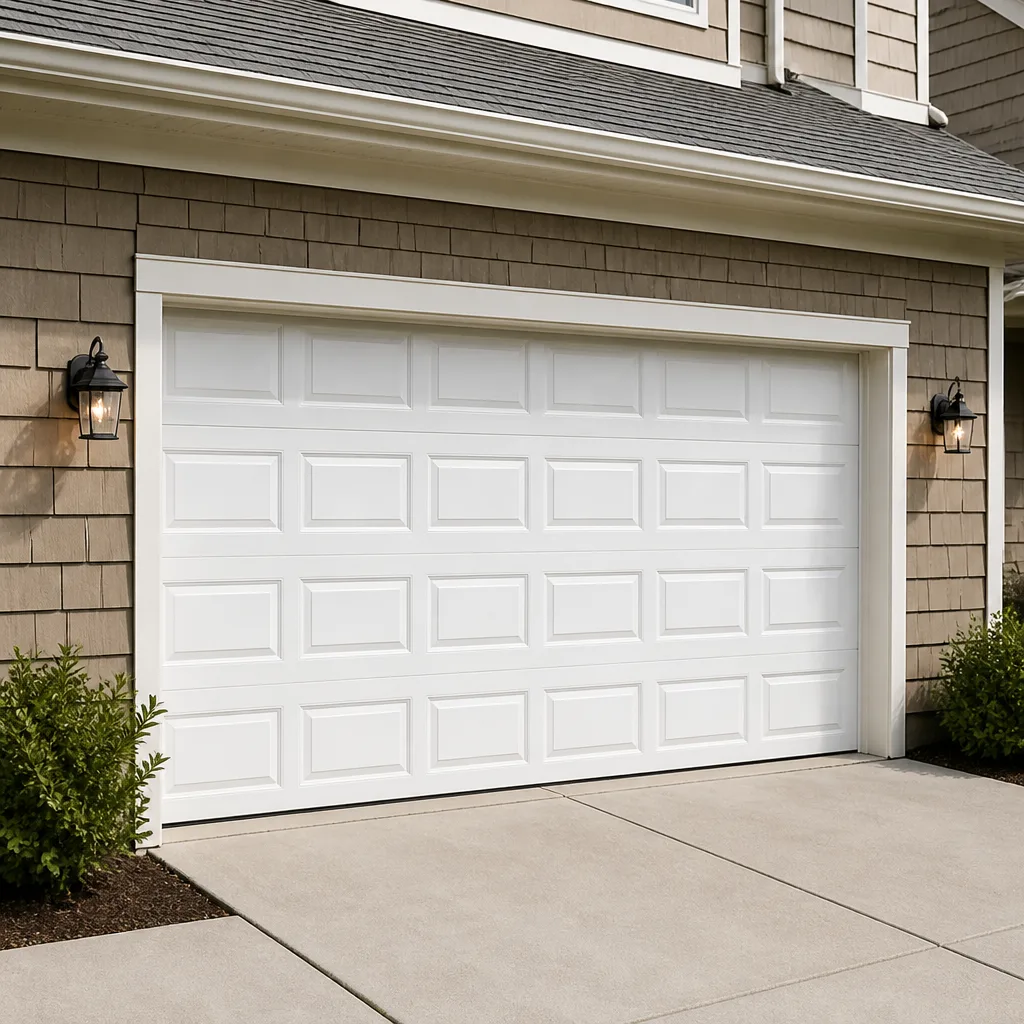 Raised-panel steel
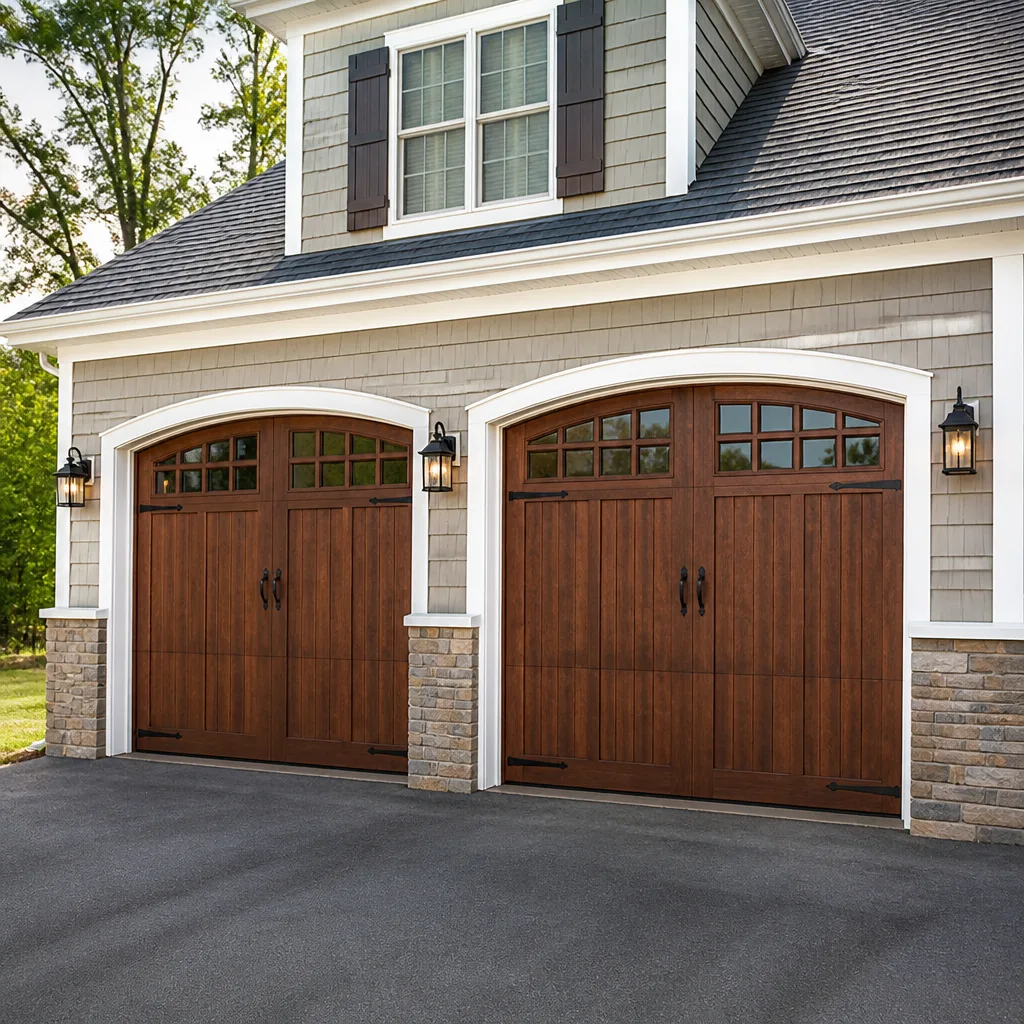 Carriage house
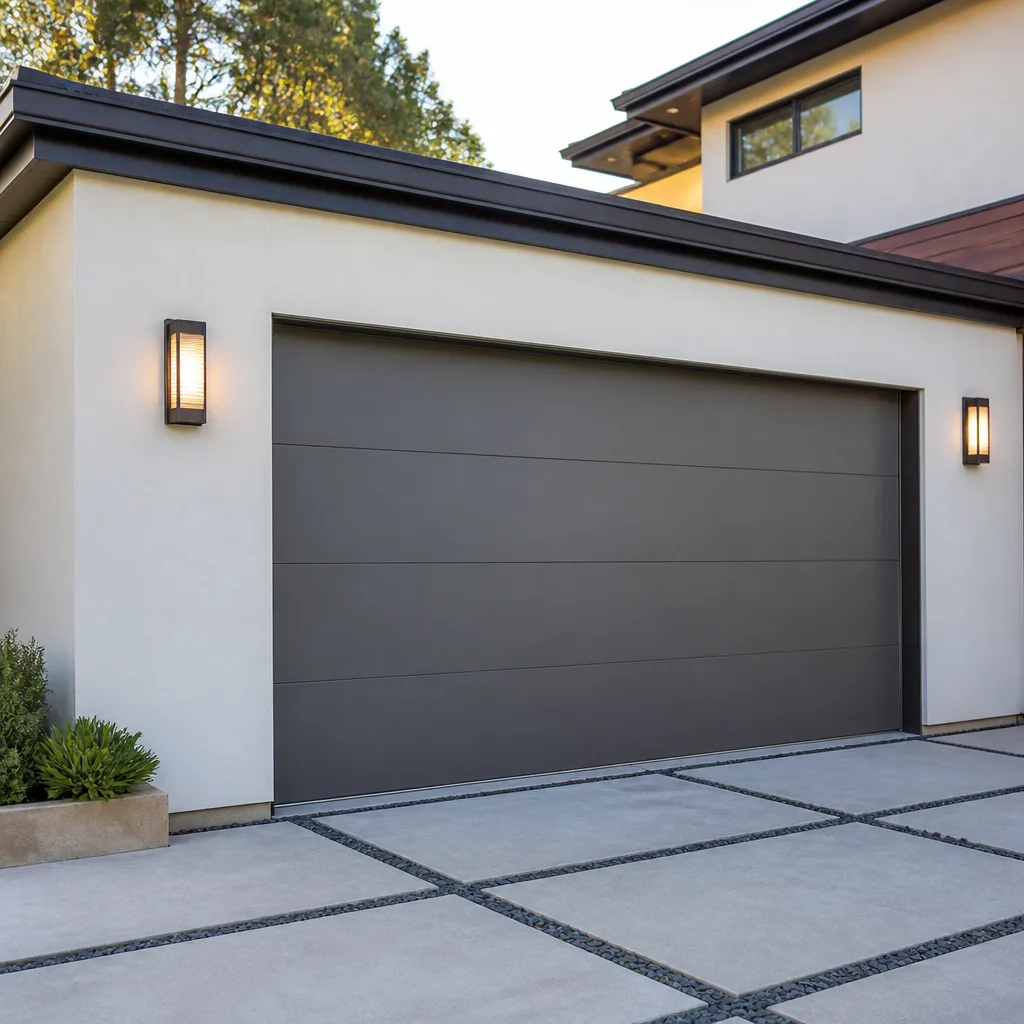 Modern flush
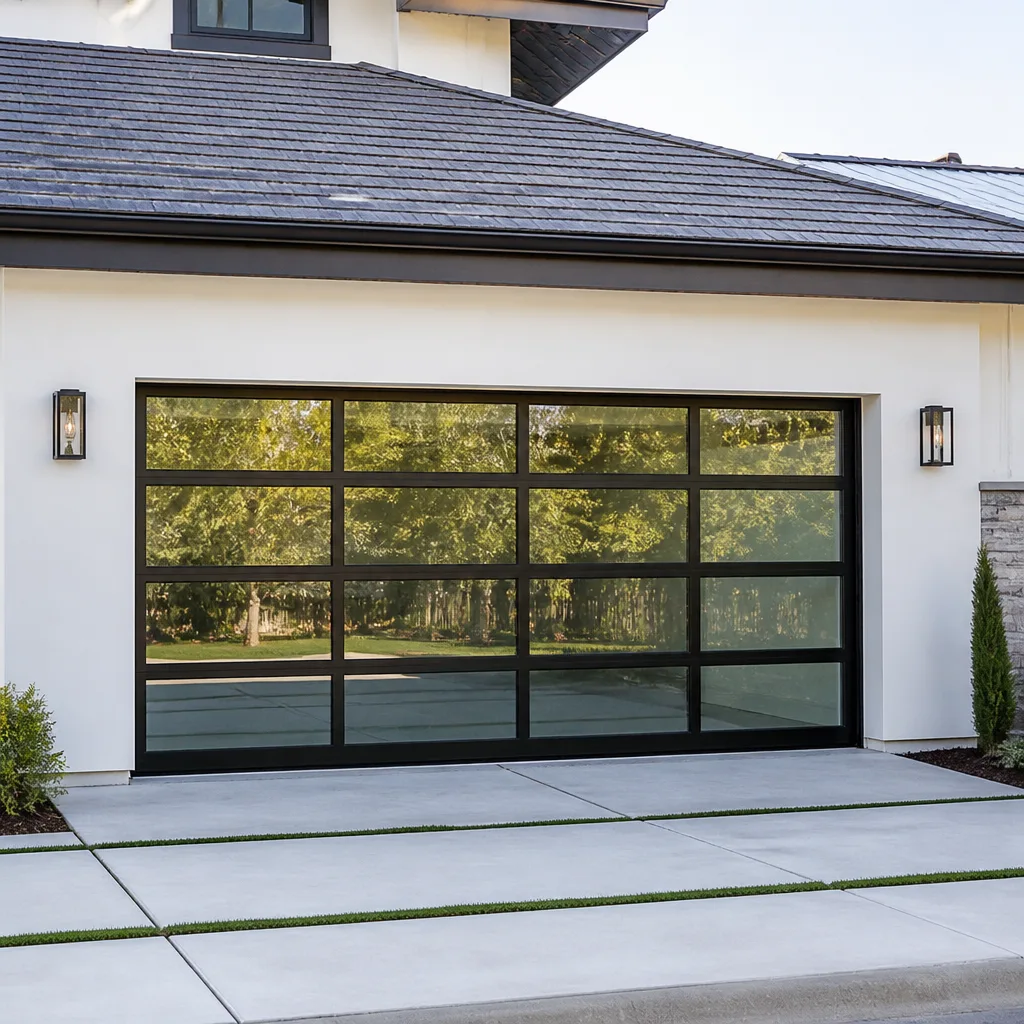 Full-view glass
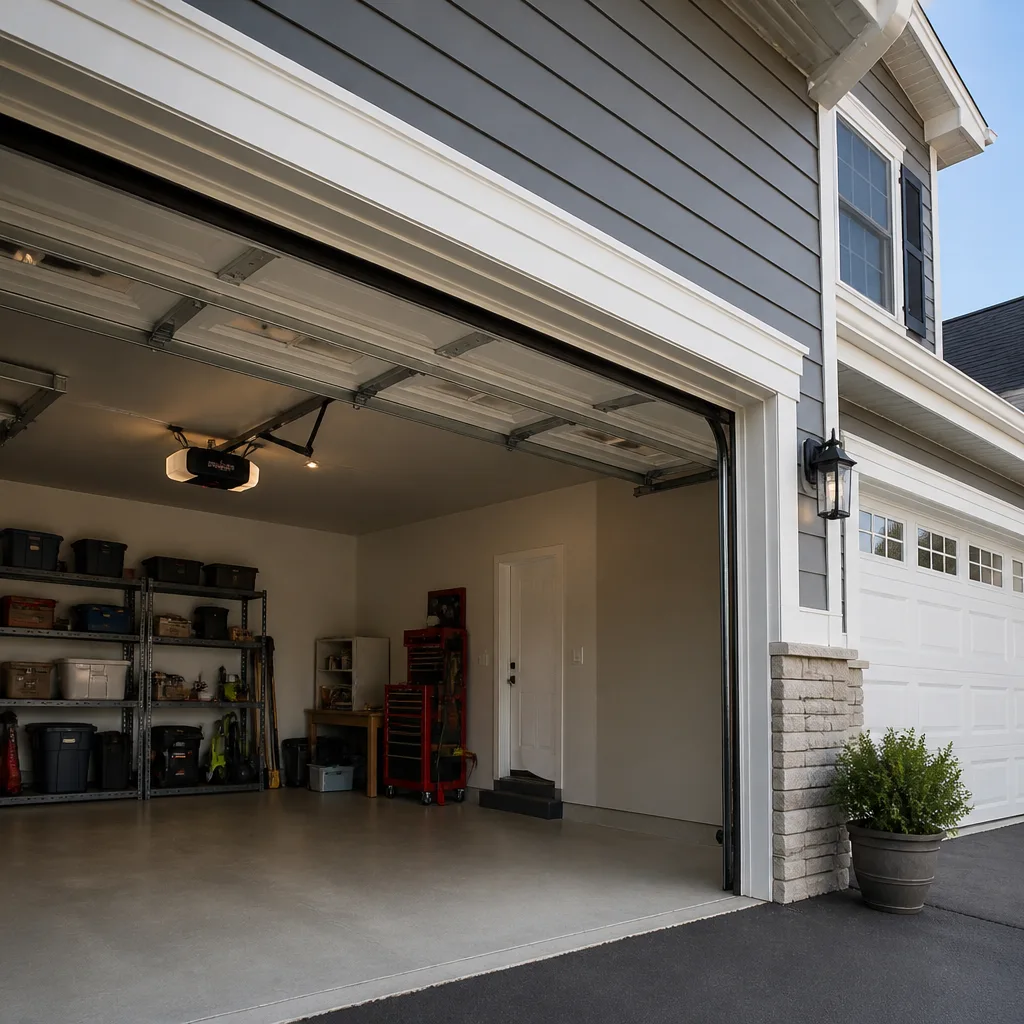 LiftMaster openers
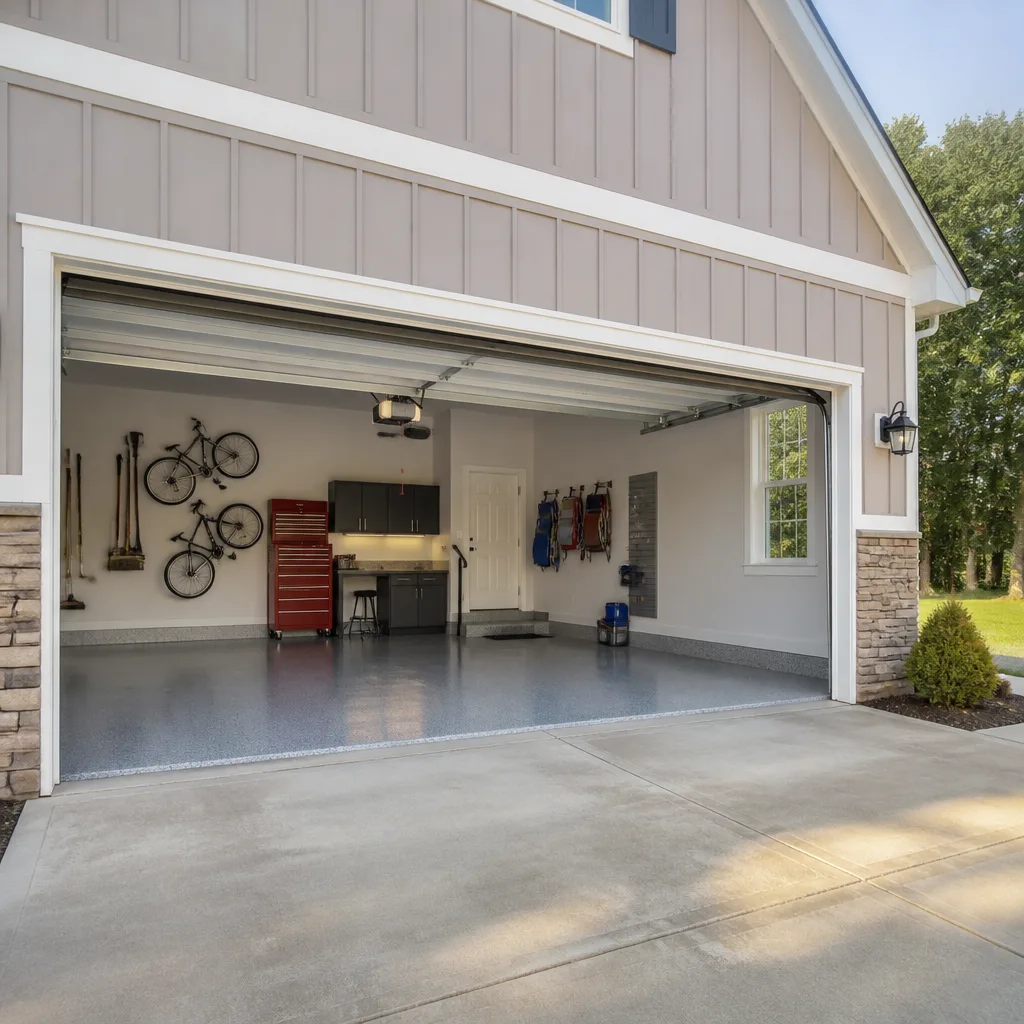 Chamberlain openers
Full 25-point door and opener safety check with every visit - springs, cables, rollers, tracks, and your LiftMaster or Chamberlain opener included
You get a price before we start. It does not change when the pro arrives.
Get your free estimateGarage Door Repair Troubleshooting in North Charleston: Common Problems and How to Fix Them
A door that reverses before it closes usually isn’t broken. Nine times out of ten we find a photo-eye sensor knocked two degrees off-axis by a garden hose, a bike handle, or a recycling bin nudged against the track overnight. That’s a four-minute fix with no tools. The trick is knowing whether you’re looking at that kind of thing, or one of the failures that genuinely needs a technician. This guide walks you through a branch-style diagnostic: start with whether the door moves at all, then work outward through the four root causes that account for most garage door problems in North Charleston. You’ll get sensor and track fixes you can handle, clear stop signs for the jobs that are too dangerous to touch, brand-specific reset quirks for Chamberlain and Genie openers, and a script for what to tell us when you do call.
Quick Answer
Most garage door failures in North Charleston fall into one of four buckets: dead power or remote signal, photo-eye sensor misalignment, worn or broken springs, and rusted or bent track from humidity. Sensor and remote problems are safe to check yourself. Spring, cable, and track work is not, and a trained technician should handle it. Diagnose in that order, starting with the simplest cause, and you’ll usually find the answer before you need to call anyone.
Styles & brands we work with
- Raised-panel steel
- Carriage house
- Modern flush
- Full-view glass
- LiftMaster openers
- Chamberlain openers
Table of Contents
- The Branch-Style Diagnostic: Start With “Does the Door Move at All?”
- Photo-Eye Sensors: The Four-Minute Fix
- Dead Remotes, Dead Keypads, and Tripped Breakers
- Springs and Cables: Why You Stop Here
- How North Charleston Humidity Wears Your Door Faster Than Inland Climates
- Brand Quirks: Chamberlain Learn Buttons, LiftMaster Error Codes, Genie Blink Patterns
- What to Tell the Technician When You Call
- Repair or Replace: How to Tell Which Makes Sense
The Branch-Style Diagnostic: Start With “Does the Door Move at All?”
Every garage door problem starts with one question, and the answer splits everything downstream. A door that won’t move at all is a different job than a door that moves and reverses, which is a different job again from one that moves but sounds wrong. If you’re in a newer subdivision like Coosaw Creek or a mid-century neighborhood off Dorchester Road, the actual failure varies by age of door and opener, but the diagnostic path is the same everywhere in North Charleston.
Work through it in this order:
- Does the motor make any sound when you press the remote? If you hear a hum or click but the door doesn’t move, the opener is getting power and the problem is mechanical or in the drive. If there’s silence, jump to the power and remote section below.
- Does the door travel partway and reverse? That’s almost always the photo-eye sensor or a binding track, not the opener.
- Does the door move but look crooked or hang on one side? That points to a cable off the drum, a broken spring on one side of a pair, or a bent track. Stop using the door and read the spring section.
- Does the door go up fine but come down hard? The down-limit setting on the opener or a worn bottom seal is the usual cause.
Walking that list takes about ninety seconds and tells you which of the sections below actually applies to your door. In our experience, homeowners skip straight to the opener and start reprogramming things when the real problem is a sensor a child’s scooter knocked out of line. Start with the branch, not the brand.
Photo-Eye Sensors: The Four-Minute Fix
Photo-eye sensors are the two small lenses mounted near the floor on each side of the door opening. They shoot an invisible beam across the threshold, and if anything interrupts it, the opener reverses the door. This is the most common garage door “problem” in North Charleston and the most common reason we get called out for something that needed no repair at all.
Here’s what to check, in order:
- Are both lenses lit? A steady light on both sides usually means alignment is fine. One blinking, one dark, or one dim points to misalignment, a dirty lens, or a wiring problem.
- Wipe both lenses with a dry cloth. Dust and pollen build up fast here, and a film of it will scatter the beam enough to trigger a reverse.
- Look for anything in the beam path. A bike tire, a garden hose, a bag of potting soil, or a leaf pile will do it.
- Check that the brackets are tight. The lenses are mounted on small brackets that get bumped. If either one wiggles, loosen the wing nut, aim it at its partner, and tighten it back down.
Aim the sensors at each other by eye, straight across the opening. You’ll know they’re aligned when both indicator lights go steady. No tools are needed beyond maybe a screwdriver for the bracket. If the lights stay dark after all of that, you may have a wiring or opener logic issue, and that’s worth a call.
For sensor wiring problems and opener logic faults that don’t resolve at the lens, garage door opener repair is the right service to book. Sensors live on the opener circuit, so a technician traces the whole loop, not just the eyes on the wall.
Dead Remotes, Dead Keypads, and Tripped Breakers
When the door doesn’t move at all and there’s no sound from the motor, the problem is power or signal, and there are only a few places it can live. This section is a fast checklist for North Charleston homeowners whose opener has gone completely quiet.
- Test the wall button, not just the remote. If the wall-mounted button opens the door but the remote doesn’t, the opener is fine and the problem is the remote or its programming. If neither works, keep going.
- Check the breaker. Garage openers are usually on a dedicated circuit, and a tripped GFCI outlet on the same line will kill it. Look for the outlet the opener is plugged into and reset it if it has a test/reset button.
- Look for the obvious unplugged cord. Openers plug into an outlet on the ceiling, and vibration and time can work the plug loose.
- Change the remote battery. It sounds silly and it’s the single most common cause of “my remote stopped working.”
- Reprogram the remote. If a new battery doesn’t fix it, the remote may have lost its pairing. How you reprogram depends on the brand, which we get into below.
If the wall button works and the remote doesn’t, you’re looking at a remote or receiver issue. If neither works and the breaker and outlet are fine, the opener’s logic board or a limit switch may have failed. A dead opener on a Friday afternoon is worth diagnosing properly before you assume the whole unit needs replacing. Many of these are simple board or wiring fixes.
For a North Charleston home where the opener needs a full diagnosis, a garage door repair visit covers the opener and the door hardware together, so you’re not paying for two separate visits to chase one fault.
Springs and Cables: Why You Stop Here
Torsion springs, extension springs, and the cables that run with them are the parts of a garage door system that genuinely earn their reputation. A torsion spring under load stores an enormous amount of energy, and when it fails it does so suddenly and with force. If your door is crooked, hangs on one side, or if you can see a clear gap in a spring coil above the door, this is where you stop diagnosing and call a professional.
The reasons to stop are real, not caution for caution’s sake:
- A broken torsion spring means the door’s weight is unsupported. Trying to lift or lower it by hand or by opener can bend the door panels, snap a cable, or drop the door.
- Cables are under tension. A cable that’s come off the drum can snap back when handled. This is not a job for a homeowner with a wrench.
- Bent track can cascade. A door running on a bent track can jump the rollers and come down unevenly, which risks damaging panels and the opener.
- Spring replacement requires the right size and winding count. Matching a spring incorrectly will shorten its life and can fail prematurely.
What you can safely do is stop. If you suspect a broken spring, don’t run the opener again. Leave the door down if it’s down, propped if it’s up and stable, and call. For a full picture of what a service visit involves, the main Rainier Garage Door Repair page describes the repair process from the first call to the final test-run of the door.
A typical North Charleston spring job involves replacing a matched pair even if only one has broken, because the second spring has lived the same number of cycles and usually fails close behind. We’ll tell you what the door needs and quote the price before any work starts. No surprise line items after the fact.
How North Charleston Humidity Wears Your Door Faster Than Inland Climates
North Charleston’s humidity is the difference between a garage door that lasts twenty years and one that starts complaining at ten. The air here holds a lot of moisture through the warmer months, and a garage is a semi-conditioned space at best. When warm, damp air moves in and the evening cools off, you get condensation on metal surfaces inside the garage. Tracks, hinges, rollers, and spring coils are all metal, and metal plus moisture plus time equals rust.
The wear shows up in specific, visible places:
- Roller stems and hinge pins. Look for orange-brown staining at the joints. That’s rust starting inside the roller housing, and it makes the door louder and harder to lift before it fails outright.
- Track surface. Run a finger along the inside of the vertical and horizontal track. If it feels rough or has visible rust freckling, the rollers are dragging against it every cycle.
- Bottom seal and weatherstripping. The rubber seal at the bottom of the door and the strips along the sides are the first things to go soft and crack in humidity. A failing seal lets in more moisture, which accelerates everything above.
- Panel paint. Bubbling or peeling paint on the lower panels, especially on steel doors near the ground, is the earliest sign of moisture working in from below.
Lubrication goes a long way here. A garage door hinge and roller should be lubed with a proper garage-door lubricant, not WD-40, once or twice a year. Keeping the seal intact matters too, because a failing bottom seal is a moisture funnel. The one thing to leave alone is the spring itself, which should never be lubricated by hand. If your door has gotten noticeably louder or slower over a season, North Charleston’s humidity is a likely contributor, and it’s worth having someone look before a small roughness turns into a failed roller or a worn cable.
Brand Quirks: Chamberlain Learn Buttons, LiftMaster Error Codes, Genie Blink Patterns
Every opener brand tells you what’s wrong in its own language, and misreading the signal sends you down the wrong path. This section covers the three most common opener brands in North Charleston homes and what their signals actually mean.
Chamberlain openers
Chamberlain openers use a “learn button” on the motor unit for remote pairing and troubleshooting. The button is usually colored (purple, red/orange, green, or yellow depending on the model and vintage). When a remote won’t pair, the fix is almost always pressing and holding the learn button until its LED lights, then pressing the remote button within a short window. If the LED blinks instead of staying steady, that’s a signal the opener is in a diagnostic state. The remote needs to match the color of the learn button to be compatible; a new universal remote may need to be set to the right color code.
LiftMaster openers
LiftMaster units display error codes through a pattern of LED blinks on the motor unit or the wall control. The count of blinks maps to specific fault categories like sensor obstruction, safety reverse, or opener logic. If your LiftMaster’s wall control is blinking a sequence with pauses between groups, counting the blinks is the fastest way to narrow the fault before calling. Write the count down. It saves a diagnosis step on the visit.
Genie openers
Genie openers use a similar blink pattern on the motor unit, but the meaning of the counts differs from LiftMaster’s. Genie blink patterns typically break into ranges that point to sensor issues, safety reverse, or opener faults. And some Genie models use a “programming” mode that’s entered by holding the wall button, so if you’ve been holding buttons trying to get it to work, you may have accidentally put it into program mode. Always check the model number on the motor unit before troubleshooting; the panel instructions vary.
If the brand-specific signal doesn’t tell you what’s happening, the door type matters too. Clopay and Amarr doors have different spring and hardware configurations that affect which parts the technician needs, and knowing your door brand as well as your opener brand helps us show up prepared. We work on all four, plus Raynor, Wayne Dalton, and Craftsman, so a single call covers the whole system.
What to Tell the Technician When You Call
The call goes faster and the visit goes smoother when you can hand over the right details up front. Here’s a script. You don’t need to memorize it; just be ready with these items:
“Our garage door [doesn’t move at all / moves partway and reverses / goes up fine but won’t come down / moves crooked]. The opener is a [brand and model number if you can find it on the motor unit]. The door is a [brand, and section or panel type if visible]. When I press the wall button, the motor [hums / clicks / is silent]. The photo-eye sensors both have [steady / blinking / dark] lights. The remote [works / doesn’t work] and the wall button [works / doesn’t]. I’ve checked the breaker and outlet. The door [has / hasn’t] been making noise or moving slower recently.”
That’s roughly thirty seconds of information that tells us whether to send a technician for a sensor or opener issue or a spring and cable repair, and what parts to have on hand. Mentioning the door brand helps because a Clopay door’s spring setup differs from a Wayne Dalton’s, and a Genie opener’s remote pairing procedure differs from a Chamberlain’s. Every detail that narrows the fault on the front end is a minute saved on the visit.
When you’re ready to call, the number is (888) 655-8807. We answer 24/7. Fast dispatch from 7am to 7pm, Sunday through Friday, and we’re closed Saturday. A call outside dispatch hours is booked into the next opening. Estimates are free, and the price is always quoted and agreed before any work starts.
Repair or Replace: How to Tell Which Makes Sense
Not every garage door problem is a repair. Sometimes the right answer is a new door or a new opener, and knowing the difference saves you money over the long run. The honest test comes down to the door’s age, the frequency of failures, and how much of the system has already been replaced.
- Repair usually makes sense when the door is otherwise in good shape, one specific part has failed (spring, cable, opener board, roller), and the dollars for that repair are a small fraction of what a new system would cost.
- Replacement makes more sense when panels are rusted through or dented, the door has needed multiple repairs in a short window, or the opener is failing on multiple fronts at once.
- The middle ground is often a single-part replacement. A failing opener on an otherwise good door is a repair, not a replacement. A failing door on a good opener is the same in reverse.
What we won’t do is push replacement on a door that just needs one part. We’ll tell you clearly which one actually makes sense for your door, in plain terms, and give you a written estimate either way. Full installation is a separate planned job from repair, so if you’re looking at a new door, expect to schedule a measure and a written price rather than a same-day job. For everything about how we handle the repair side, the North Charleston page covers our service area and process. For the wider view on the region, garage door repair is where we lay out the common jobs North Charleston neighborhoods actually call us for.
Common Mistakes to Avoid
- Running the opener after a spring breaks. The door’s weight is unsupported and the opener will strain or damage the door. Stop, leave it down, and call.
- Repeatedly pressing the remote. If the door isn’t responding, ten presses won’t fix it and can sometimes cause an opener in safety mode to blow a fuse or trip the logic board. Diagnose once, then act.
- Using WD-40 on hinges and tracks. It attracts dust, which makes rollers sticky. Use a proper garage door lubricant and keep it off the spring.
- Lubricating a torsion spring by hand. Springs are under enormous tension and should be handled only by a trained technician. Don’t spray them, don’t touch them.
- Assuming a bent track can be straightened with a hammer. Track alignment depends on the rail profile, and a backyard fix can make it worse and damage the rollers. If the track is visibly bent, leave it.
- Ignoring a remote that half-works. An intermittent remote often means a failing receiver or a dying battery, and a small fix now saves a no-open call on a morning you’re running late.
- Assuming a louder door is fine. In North Charleston’s humidity, a door that’s gotten noisier over a season is often showing early roller and hinge wear. Have it checked before a small problem turns into a failed spring or cable.
See the difference
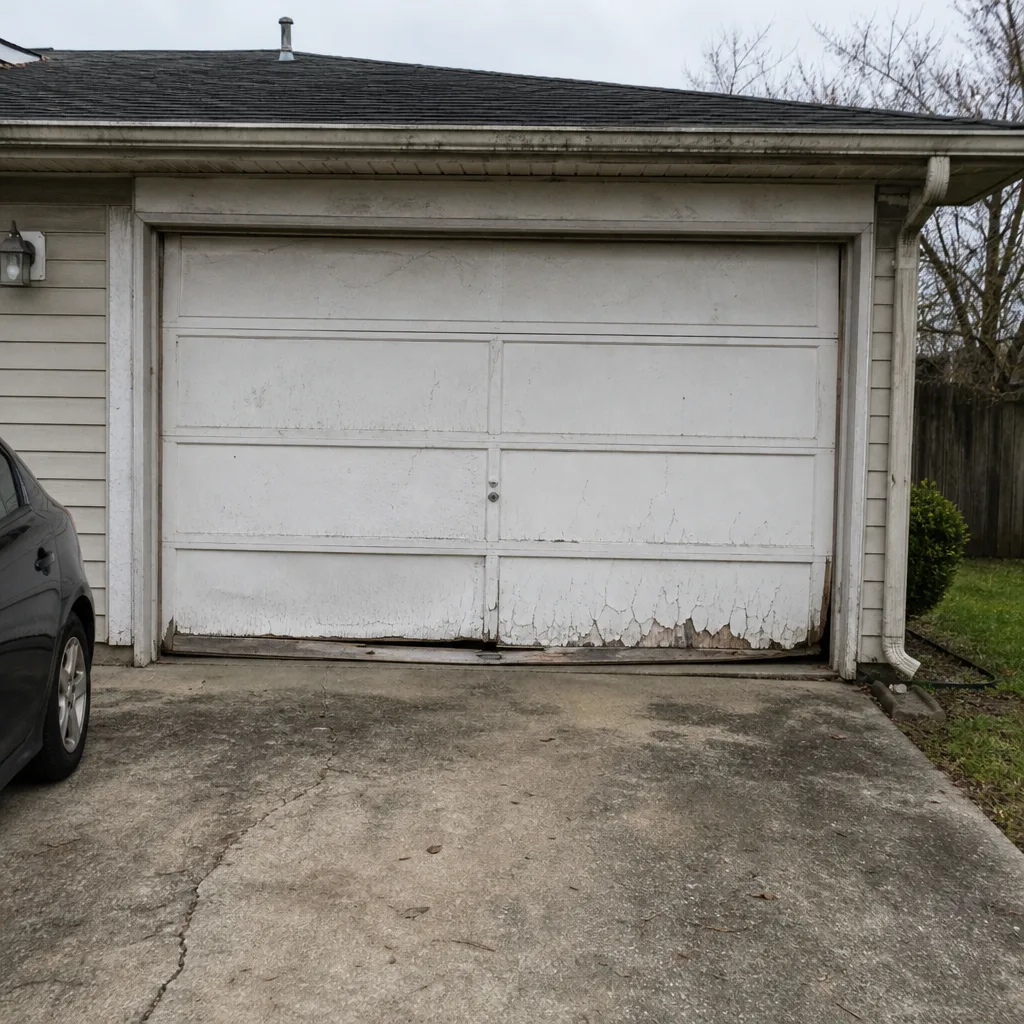 Before
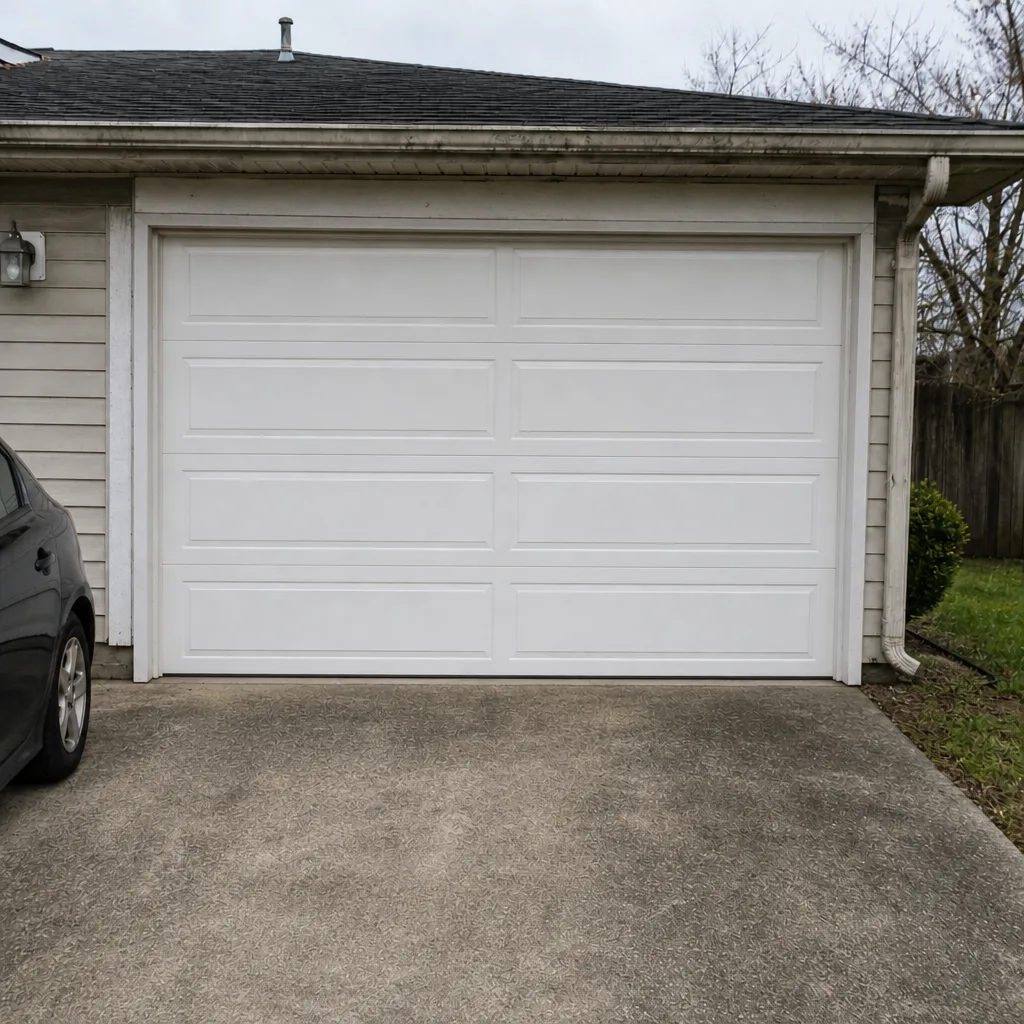 After
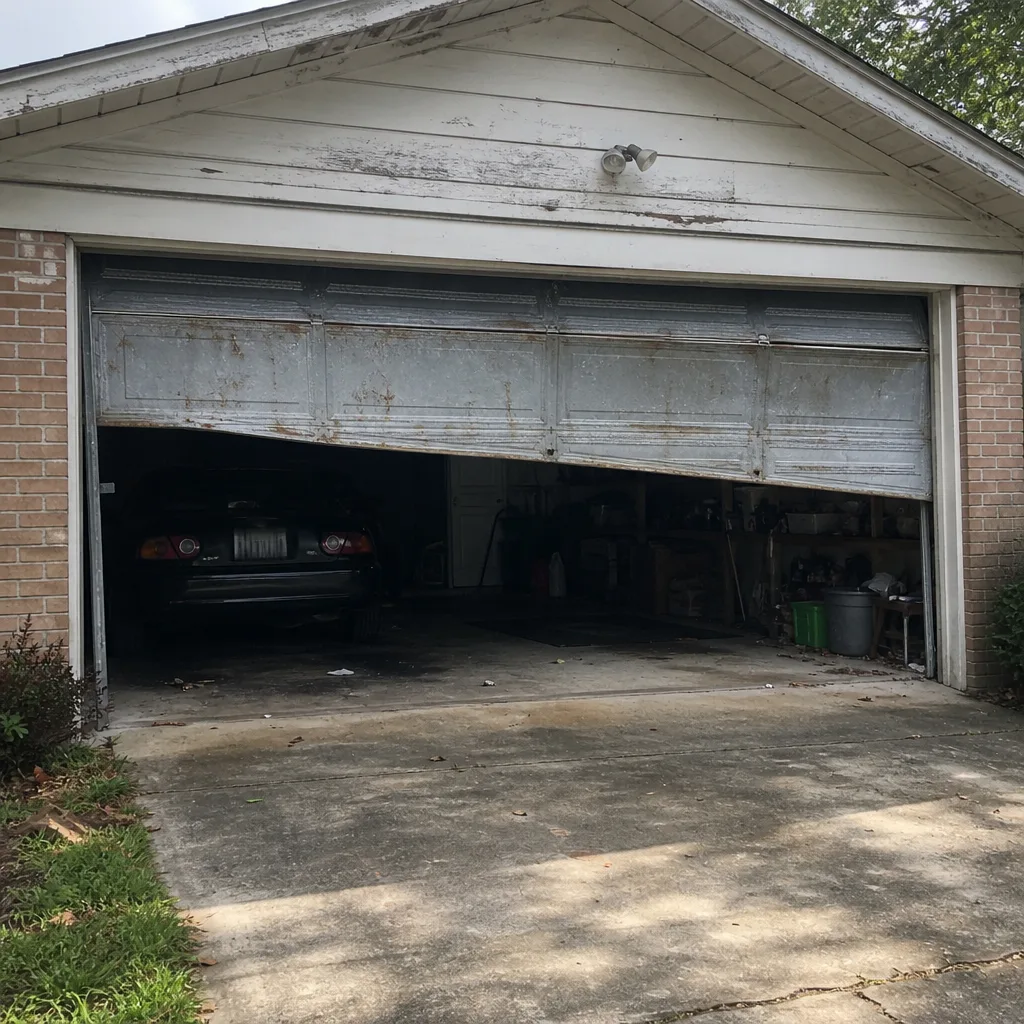 Before
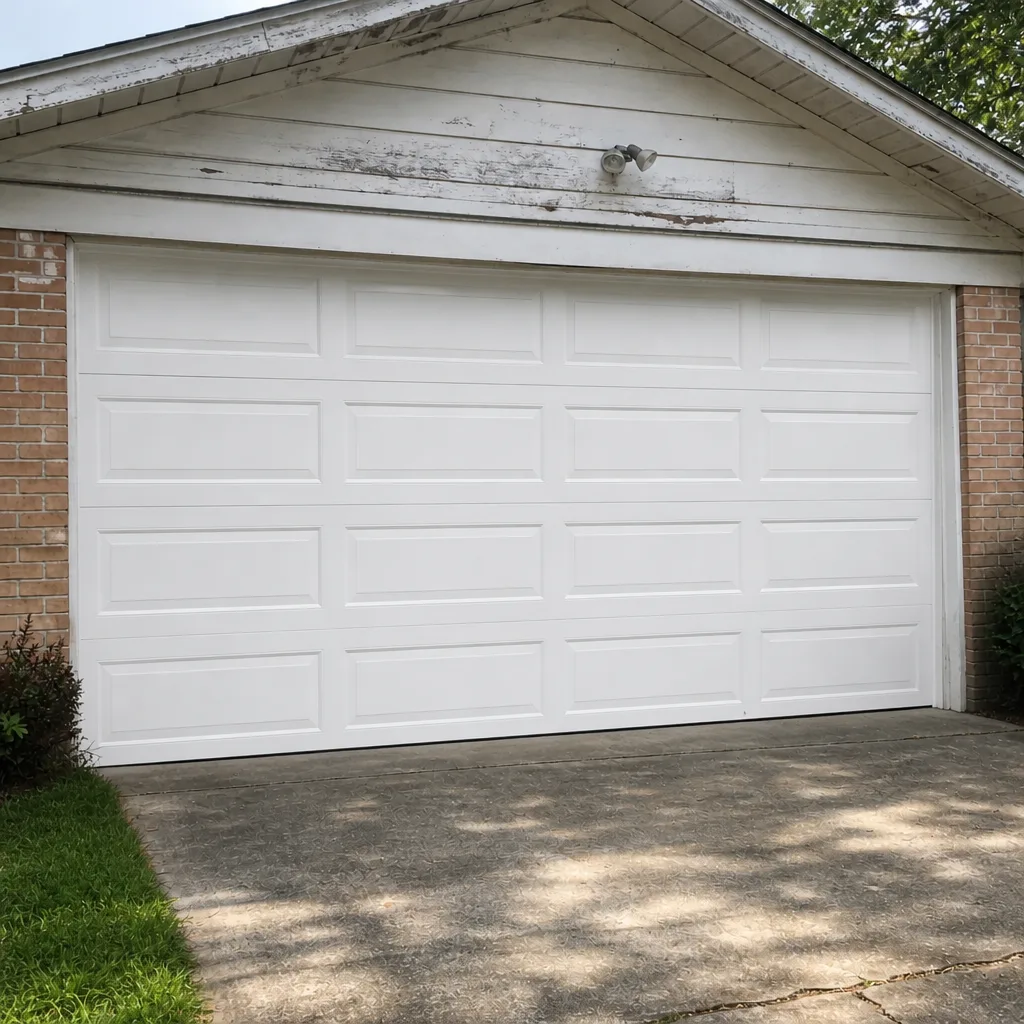 After
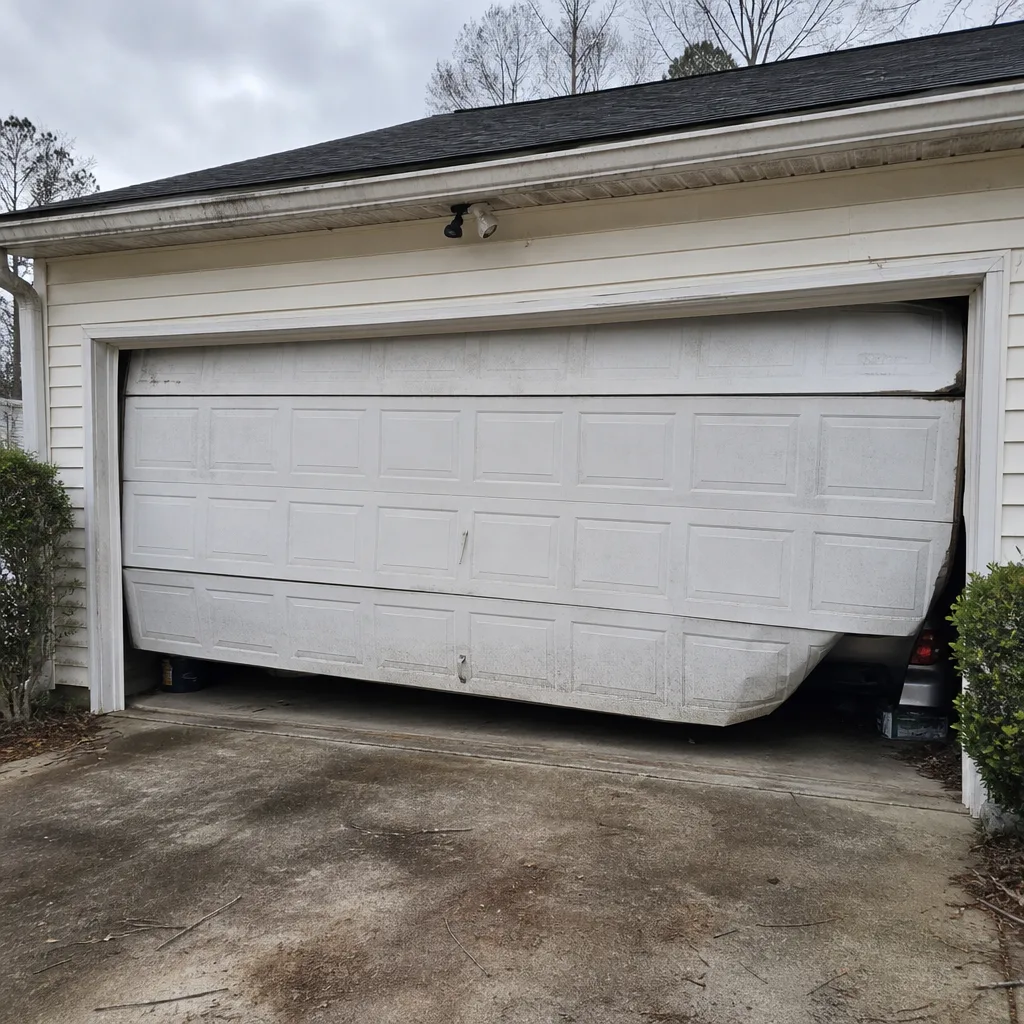 Before
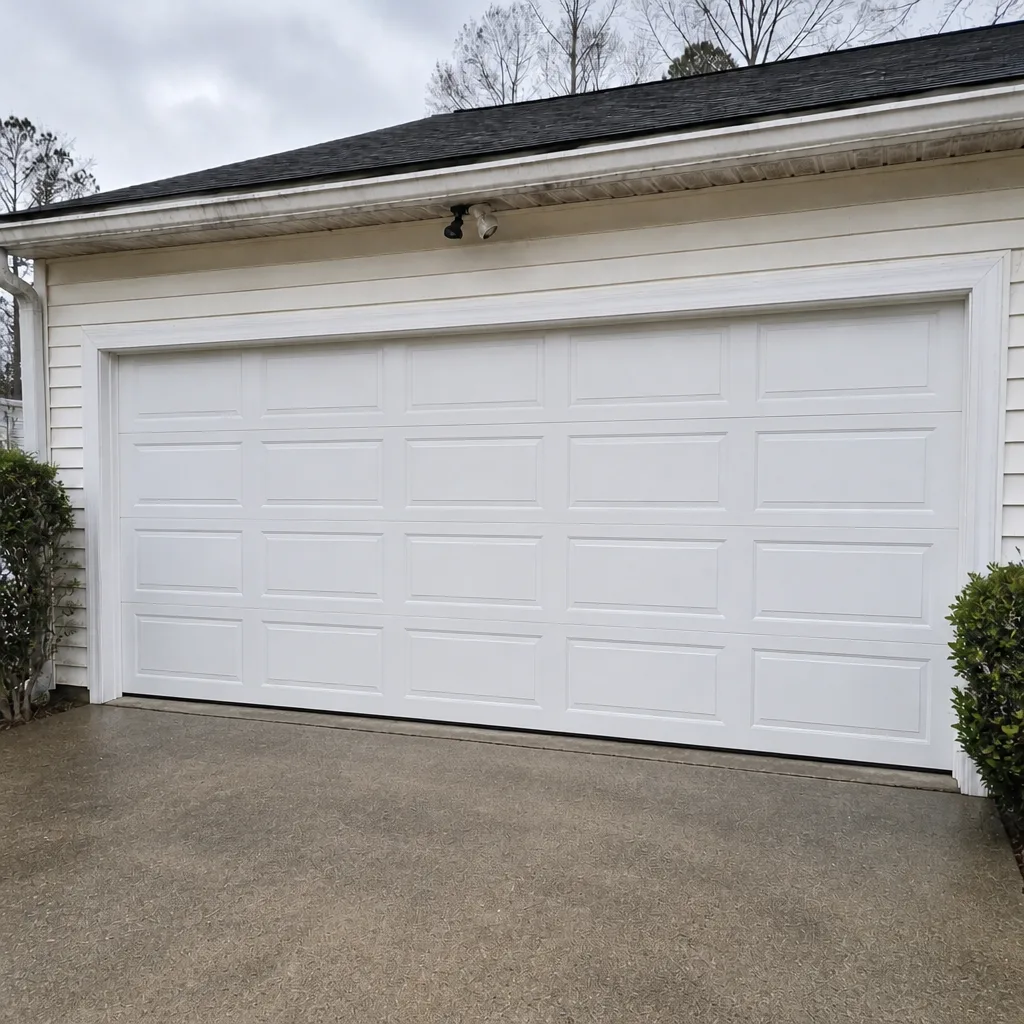 After
When to Call a Professional
Call a professional if the door has a broken spring or a visible cable off its drum, if the door is crooked or hangs on one side, or if you can see damage on the track. Those are all jobs the door’s weight and tension make too dangerous to touch, and there’s a real chance of injury or further damage if you try. Also call if the opener is silent and the breaker and outlet are fine, if a sensor won’t stay aligned after a couple of attempts, or if the door has gotten noticeably slower or louder over a season. Same-day service is available for repair calls. Rainier Garage Door Repair offers free estimates in North Charleston and our technicians have up to 13 years of experience, so you’re getting someone who’s seen the brand on your door before.
Frequently Asked Questions
Your photo-eye sensors are almost certainly misaligned or blocked by something sitting in the beam, and it’s a four-minute fix you can do without tools. Wipe the lenses, clear anything in the path, and check that both brackets are tight and aimed at each other. If the lights stay dark after all of that, it’s worth a call to (888) 655-8807. Estimates are free, and the price is quoted before any work starts.
Spring and sensor repairs usually fall in the modest range, opener board or motor failures and cable jobs tend to run higher, and full door replacements are a separate planned job with its own written estimate. The best way to get a number that means something is a free estimate, since the job type and the parts matter more than any generic figure. Call (888) 655-8807 for an exact quote. The price is always quoted and agreed before work starts.
For repair calls, yes, same-day service is often available. Dispatch runs from 7am to 7pm, Sunday through Friday, and the phone line is answered 24/7. Installation and full replacement are scheduled differently, since they involve a measure and an order. Call (888) 655-8807 and we’ll tell you what’s possible today.
No, the written estimate sets the price, and that’s agreed before any work starts. What we do on the visit is diagnose, explain what’s needed, put it in writing, and wait for your go-ahead. If the diagnosis turns up a different problem than the call suggested, we’ll tell you and quote the actual job in writing before we touch it. Call (888) 655-8807 for a free estimate.
Yes, the technicians who work on North Charleston homes are experienced, and our technicians have up to 13 years of experience. Every job is quoted in writing and every estimate is free, so you know the price before any work begins. Call (888) 655-8807 for details before booking.
The humidity accelerates rust and roller wear. Warmer months hold a lot of moisture in the air, and the cool evenings pull condensation onto metal inside the garage. Rust shows first at the roller stems and hinge pins, then in the track surface and the bottom seal. Keeping the door lubricated and the bottom seal intact slows the wear, and if the door’s gotten louder over a season, that’s worth a look. Call (888) 655-8807 to schedule one.
We work on all eight of the most common residential brands: LiftMaster, Chamberlain, Genie, Clopay, Amarr, Wayne Dalton, Craftsman, and Raynor. That covers the openers and doors in almost every North Charleston home. Tell us the brand when you call and we’ll confirm the fit and what parts to have ready. Call (888) 655-8807 for a free estimate.
The Bottom Line
Most garage door problems in North Charleston fall into one of four buckets: sensors, power and remotes, springs and cables, or humidity-driven wear. Start at the branch point, “does the door move at all?”, and work outward. Sensors and remote fixes are things you can and should handle yourself; springs, cables, and bent track are jobs for a trained technician, and the reasons are real. The humidity in this city means lubrication and bottom-seal care matter more here than they do inland, and brand-specific quirks on Chamberlain, LiftMaster, and Genie openers actually tell you what’s wrong if you know how to read them. Call (888) 655-8807 for a free estimate. We answer 24/7. Fast dispatch from 7am to 7pm, Sunday through Friday, and we’re closed Saturday.
Written by the team at Rainier Garage Door Repair.