
Last updated November 15, 2026
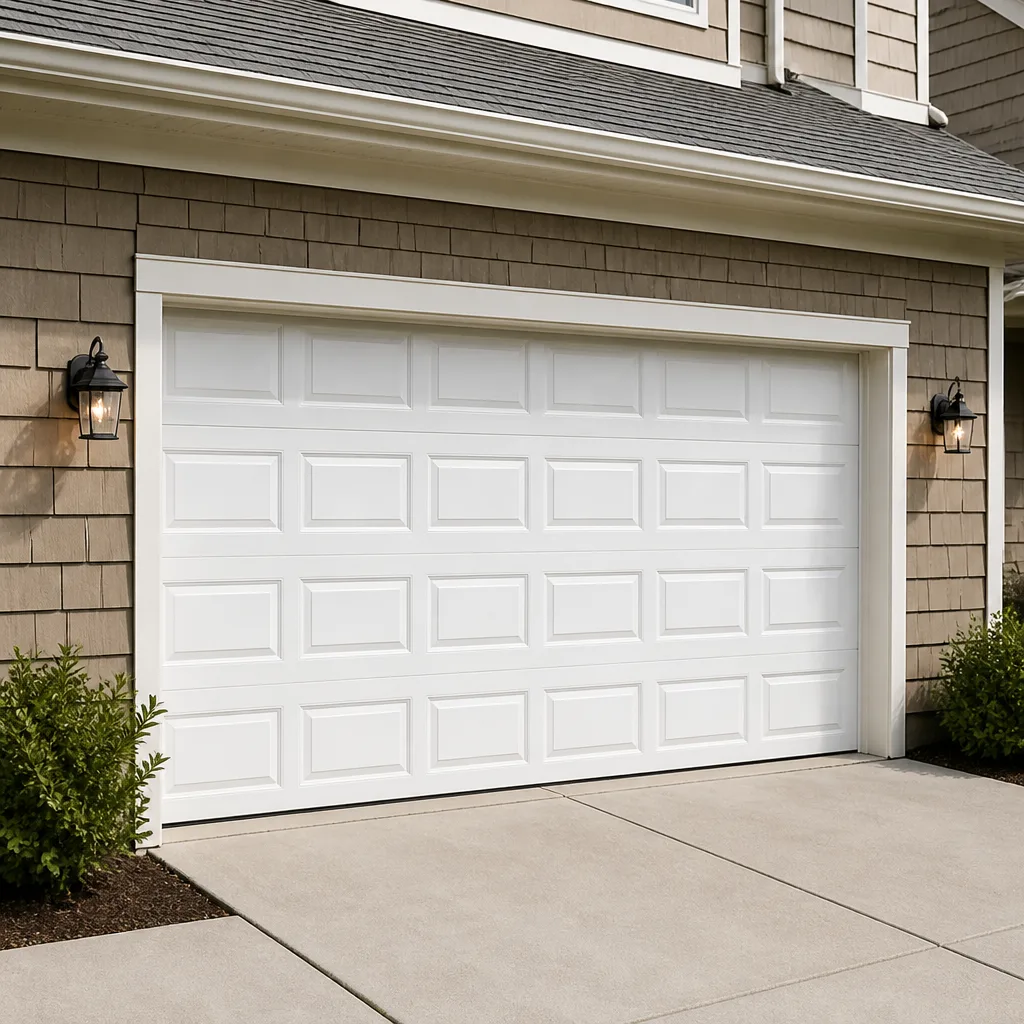 Raised-panel steel
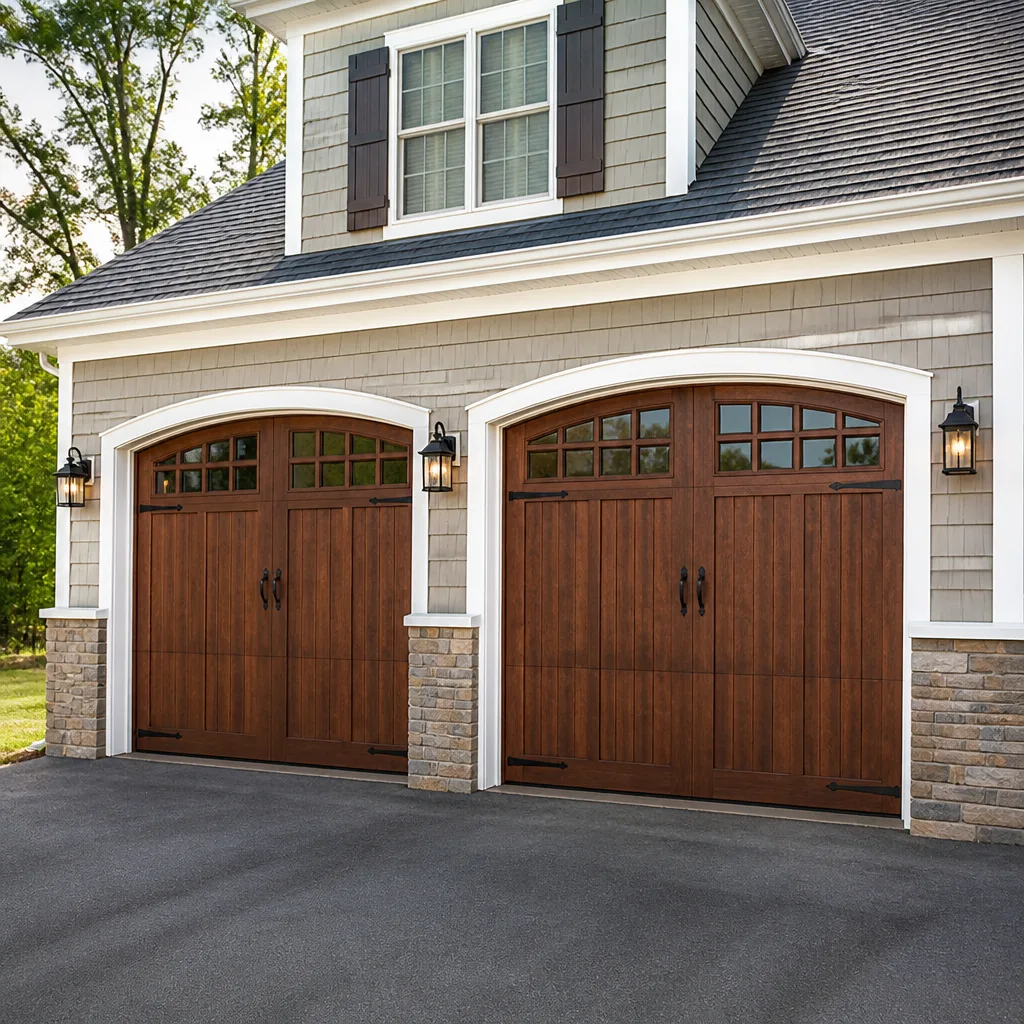 Carriage house
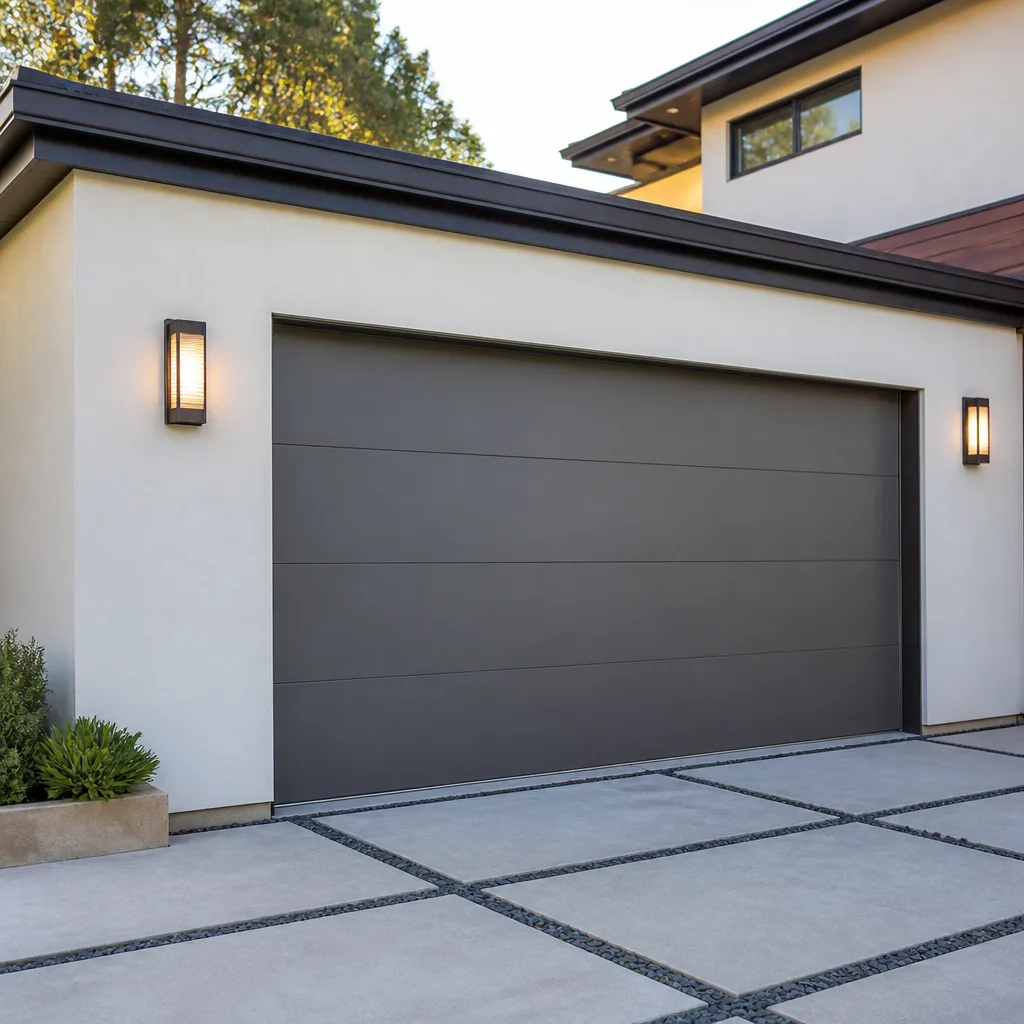 Modern flush
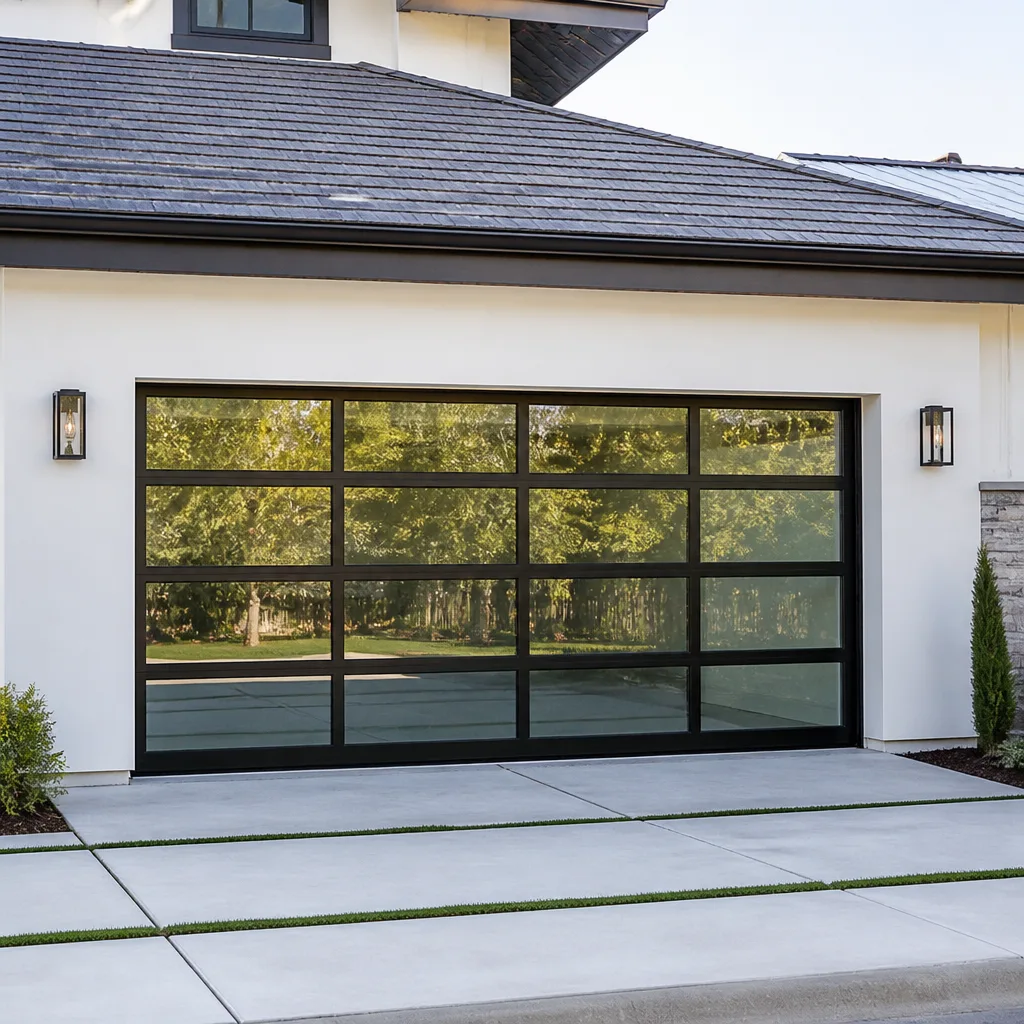 Full-view glass
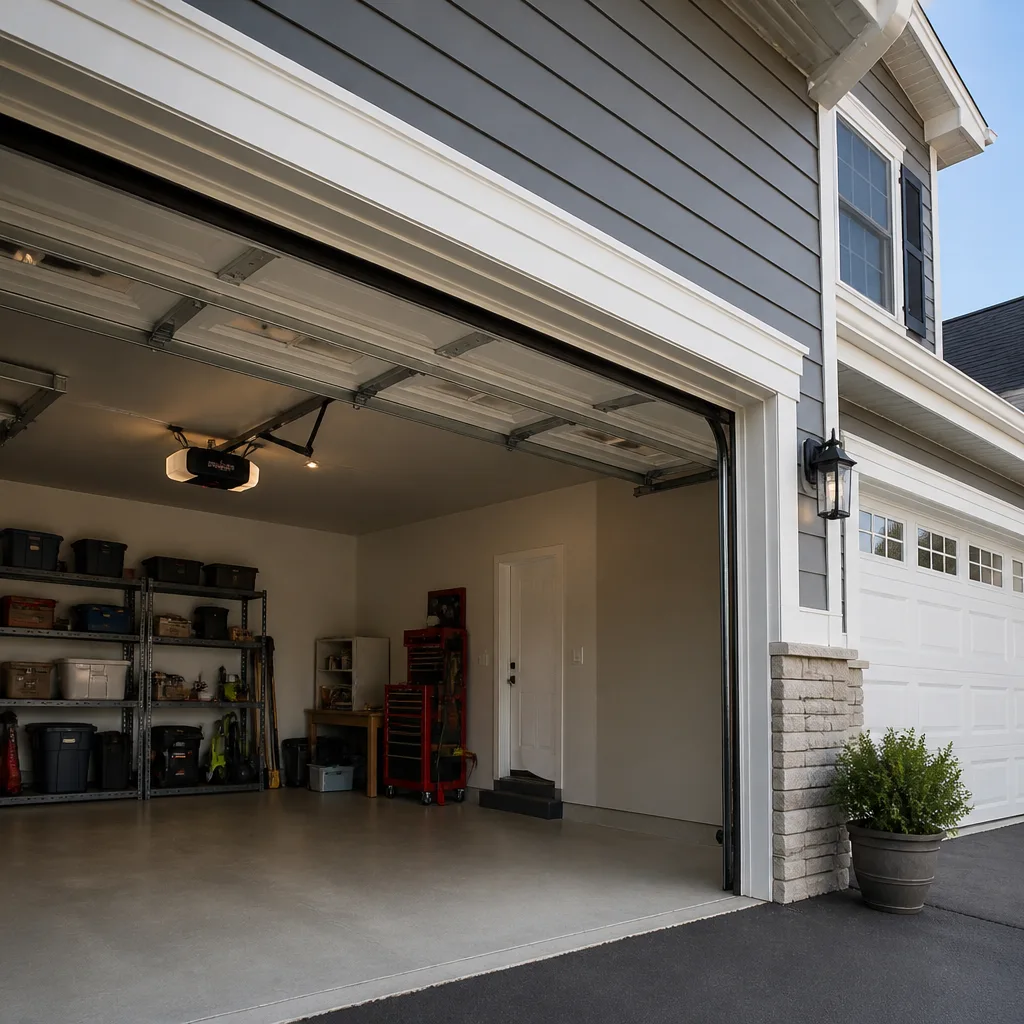 LiftMaster openers
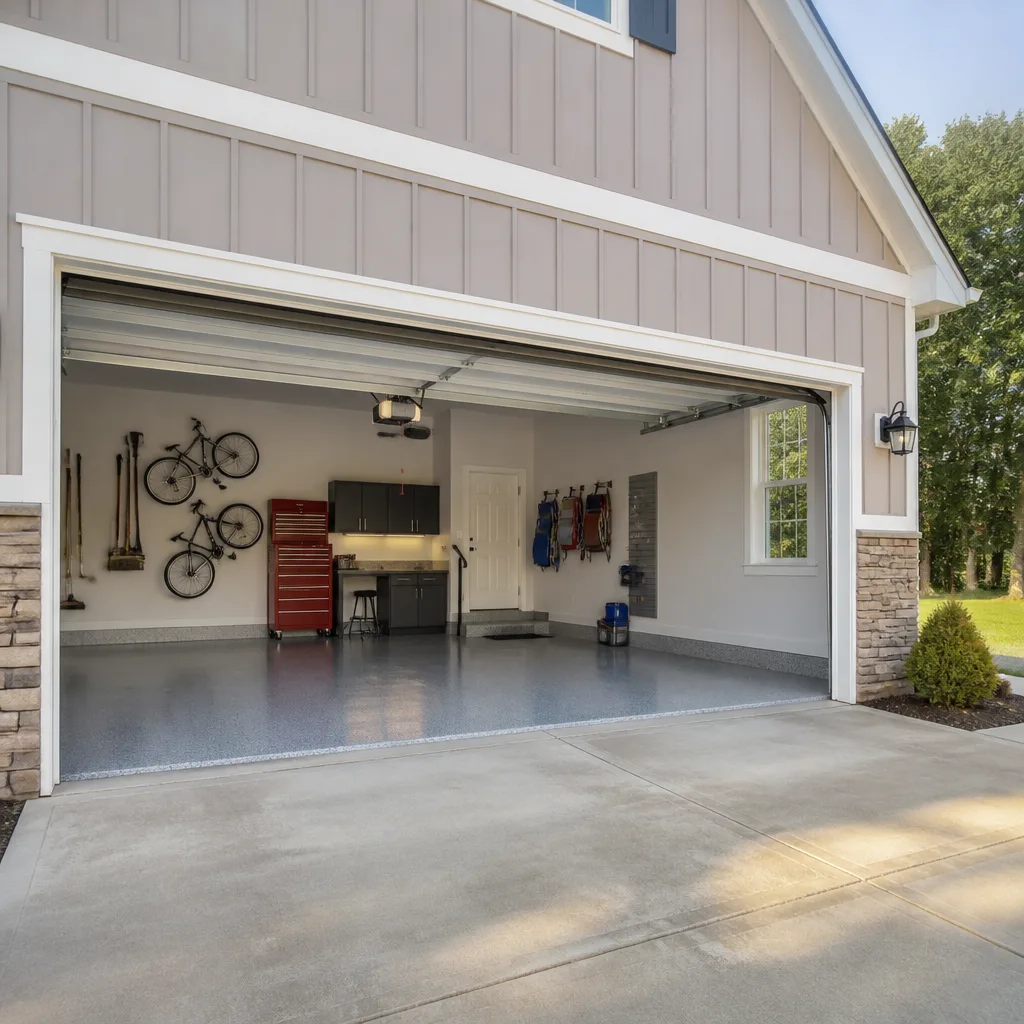 Chamberlain openers
Full 25-point door and opener safety check with every visit - springs, cables, rollers, tracks, and your LiftMaster or Chamberlain opener included
You get a price before we start. It does not change when the pro arrives.
Get your free estimateChoosing the Right Garage Door Brand: A Buyer’s Guide for North Charleston
Most homeowners shop for a garage door the way they’d shop for a refrigerator: they look at the finish, pick a price, and let the installer choose the make. That last part is where it goes wrong. A door is a mechanical system bolted to your house, and the brand behind it decides how fast a replacement panel arrives after a small mishap, whether the finish survives humidity, and whether your opener will talk to your smart home five years from now. In North Charleston, a city where a warm, humid climate works on every painted surface, those questions matter more than the brochure photo. This guide compares the eight brands you’ll actually find on local doors on the three criteria that shape a decade of ownership.
Quick Answer
The right garage door brand in North Charleston is the one with parts and service within reasonable driving distance, a finish warranty that doesn’t treat humidity as a disqualifier, and an opener ecosystem you can change later without replacing the whole system. For most buyers here, Clopay and Amarr offer the widest local distribution and the most forgiving warranty language, Wayne Dalton is a common builder brand worth knowing how to service, and Craftsman openers are everywhere, which makes service easy but smart-home integration limited. Steel thickness, insulation core, and opening size decide what will actually hold up, not the logo.
Styles & brands we work with
- Raised-panel steel
- Carriage house
- Modern flush
- Full-view glass
- LiftMaster openers
- Chamberlain openers
Table of Contents
- The Three Factors Buyers Get Wrong
- Local Parts and Service Availability for the Eight Major Brands
- Finish Warranties in a Humid Climate: What’s Covered and What’s Excluded
- Opener Ecosystem Lock-In: LiftMaster, Chamberlain, Genie and Craftsman
- Steel Gauge and Core Construction: What’s Behind the Paint
- Where the Major Brands Fit a North Charleston Home
- How to Measure Before You Choose a Brand
- Why a Brand-Agnostic Installer Serves You Better
The Three Factors Buyers Get Wrong
Door brand choice usually comes down to three things: how quickly a broken part can be sourced, how the finish holds up in the local climate, and how the opener attached to it can be upgraded later. Nobody prints those three lines on a showroom tag. They decide most of the long-term cost of ownership.
Here’s how we’d frame it for a homeowner in North Charleston. Look past the color chips and the window options and ask a plainer set of questions:
- Parts distance. When a panel or a hinge fails, how far away is the nearest source for a replacement? A brand with regional distribution serving the Lowcountry can often supply parts in days. A mail-order-only brand can stretch a repair into a wait.
- Finish warranty language. Warm, humid air is hard on painted steel and wood-grain finishes. A warranty that explicitly covers finish failure in humid conditions is worth more than a longer term with a vague exclusion.
- Opener compatibility. Openers are usually the first component to fail on any system. If your opener technology is locked to one manufacturer’s cloud, replacing it later may mean replacing remotes, keypads and integration too.
A door that fits these three criteria tends to be the quiet one: it opens smoothly, requires less unscheduled garage door repair, and doesn’t turn into a sourcing headache. That’s the standard we use whenever we quote an installation in North Charleston.
Why the Local Market Shifts the Answer
A homeowner in a dry inland climate can afford to ignore the finish question. In North Charleston, humidity is a constant. Painted steel panels and wood-grain finishes work harder here, and any warranty that explicitly recognizes humid conditions is a better fit than one silent on the subject. Add the standard Lowcountry schedule of summer thunderstorms and hurricane season prep, and a door that stays consistent under thermal swings earns its place.
Size matters too. The North Charleston housing stock runs the full range from compact ranch homes with single-car openings to newer builds with wider and taller double doors. Brand availability for non-standard sizes isn’t equal, and a specialty size can trim your shortlist quickly.
Local Parts and Service Availability for the Eight Major Brands
Parts availability is the single most practical factor in any brand decision, and it’s the one buyers ignore most. A brand with regional distribution within driving distance of North Charleston will get a replacement panel or spring assembly to your garage in days. A brand sold mostly through catalog and mail order can turn a simple panel swap into a multi-week wait.
The eight brands we service most often fall into three practical tiers on parts logistics. This is a working description of what we’ve observed in the field, not a manufacturer ranking:
- Tier one: broad regional distribution. Clopay and Amarr doors are among the most common residential installations across the Southeast, and their dealer networks mean parts are usually available regionally rather than by special order. When a panel needs replacing, that difference shows up as a shorter wait.
- Tier two: strong builder presence with serviceable parts. Wayne Dalton doors are widely installed in production housing, which means hardware and springs are stocked by many suppliers. Service is reliably straightforward even when a specific style is discontinued.
- Tier three: opener brands with universal parts. LiftMaster, Chamberlain, Genie and Craftsman openers use widely available parts (belts, gears, remotes, safety sensors, logic boards) because those four manufacturers cover most residential openers in the United States. This is why garage door opener repair is usually faster than panel replacement.
One brand not on the eight-name list is worth flagging for a different reason. CHI doors appear on some quote sheets and are a legitimate manufacturer. We note it because a buyer’s shortlist should be based on what a local installer can actually service, not only what a showroom can order. If a brand can be ordered but not serviced reasonably nearby, treat that as a warning, not a feature.
How to Check Parts Availability Before You Buy
Before you sign an installation contract, ask the person quoting the job three questions in plain terms:
- If a door panel is damaged by a vehicle or a storm and needs replacement in two years, where does the replacement come from? A clear answer means the brand has a pipeline. A shrug means mail order.
- Is the specific model common in South Carolina, or is it a specialty order? Volume builders install common models, which means common parts.
- If the model is discontinued, does the manufacturer offer compatible replacement parts, or does it expect you to replace the whole door?
These questions don’t require insider knowledge to ask. They just require asking them before you commit, which far too few buyers do.
Finish Warranties in a Humid Climate: What’s Covered and What’s Excluded
A garage door finish warranty is only useful if it holds up in North Charleston’s humidity. Most standard finishes exclude damage from standing water, chemicals, and exposure to salt-air in coastal zones. That last exclusion matters even for homes a few miles inland, because it’s how many manufacturers scope warranty coverage for humid regions.
Three things to look at on any finish warranty:
- Whether the warranty explicitly covers humid climates. Some manufacturers list a coastal or salt-air tier of warranty for their premium lines. That’s the coverage you want. A standard “baked-on finish” warranty may not be as strong as one that recognizes the conditions.
- What disqualifies coverage. Cosmetic fade, chalking, peeling, or blistering from normal humidity exposure should be a covered event, not a casualty. If the language treats weathering from humidity as normal wear and tear, the warranty is decorative.
- Who performs the warranty claim. Some brands streamline the claim through a certified installer. When you hire a multi-brand company, we can help interpret the warranty for whichever brand is on your door, which often speeds the process along.
Reading the Exclusions Like a Field Technician
The exclusions page is where the real warranty lives. A typical finish warranty excludes damage from abrasion, misuse, salt spray, and improper installation. That last category is worth understanding, because it turns quietly back on the quality of the installer rather than the brand. A properly measured and sealed installation protects the finish far more than the color chip does.
Humidity is the one that matters most in North Charleston. Painted steel doors are most durability-sensitive to moisture at the edges and at the bottom seal, where water sits after a heavy rain. That’s why we check the bottom seal and side trim closely during any installation or repair visit. A door with a well-sealed bottom will outlast one with stronger steel and a leaky seal.
The honest summary: any brand on the eight-name list can be a great choice, but no door guarantees a finish without good installation. Given equal doors, the better-installed one wins in this climate.
Opener Ecosystem Lock-In: LiftMaster, Chamberlain, Genie and Craftsman
Openers are the part of a garage door system that changes most often over a decade, and the brand of your door doesn’t have to match the brand of your opener. What does matter is how tightly the opener is tied to one manufacturer’s software and cloud services. LiftMaster’s myQ platform, Chamberlain’s web-connected MyQ line, and Genie’s Aladdin Connect represent three distinct approaches to smart-home compatibility, and they aren’t interchangeable.
How the Three Smart Platforms Differ
- LiftMaster (myQ). The most familiar smart platform in residential openers. It integrates with most major smart-home platforms (Alexa, Google Home, and many home security systems), and the app is broadly supported. LiftMaster openers are commonly installed with Clopay doors because both sit inside the same parent company.
- Chamberlain (MyQ). Chamberlain is part of the same platform family as LiftMaster (same parent company, similar app). Its integration with smart homes is strong, and because Chamberlain openers are everywhere in North Charleston, parts are easy to source. The caveat: the ecosystem is essentially proprietary. If Chamberlain changes the platform, you migrate with it.
- Genie (Aladdin Connect). A solid, well-supported alternative. Aladdin Connect can be added to most Genie openers. Its smart-home integrations are good but narrower than MyQ’s, and the remote hardware is distinct enough that upgrades need planning rather than a quick swap.
- Craftsman. Craftsman openers are the most common opener on the market because they were sold under the Craftsman brand at a major national retailer for decades. Parts are widely available. The tradeoff is that Craftsman openers are generally the least tied to modern smart-home platforms, so long-term integration flexibility is the weakest of the four.
Planning Your Ecosystem Before the Door Goes Up
If smart-home integration is important to you, start with the opener decision, not the door. Deciding which platform you want before installation means far fewer compromises later. If you want the broadest smart-home support, LiftMaster or Chamberlain is the natural choice. If cost of service and universal parts are your priority, Craftsman remains a pragmatic pick, at the price of some integration flexibility.
A good rule: whatever the opener, the package should leave room to swap it a decade from now without touching the door itself. Universal door hardware lets you do that. Non-standard mounting can lock you into a specific opener make, which is the kind of long-term commitment no door brand advertises.
Steel Gauge and Core Construction: What’s Behind the Paint
Steel gauge and insulation core decide whether a door survives a decade of Lowcountry humidity. The lower the gauge number, the thicker the steel; 24 to 25 gauge is common for entry-level doors, 20 to 22 gauge for standard residential, and 16 to 18 gauge for heavier-duty or non-insulated doors. Most residential doors in North Charleston live in the 24-to-25 gauge or 20-to-22 gauge band, and the difference shows up in dent resistance and panel rigidity rather than in the brochure.
Insulation is a separate decision. There are two common cores:
- Polyurethane insulation. Higher R-value per inch and denser, so it resists compression and adds panel-rigidity. The core of a two-inch polyurethane door often delivers a noticeably more solid door, which helps both in thermal handling and in how cleanly it closes.
- Polystyrene insulation. Lighter and typically less expensive. Fine for a non-insulated garage or a mild-weather setting, but it does less for a door that’s also a wall of your home.
Matching Gauge and Core to the Opening
A wide double door benefits from a denser door panel, because the same wind load and the same daily lifting stress act on more surface. A narrow single door can go lighter without losing much. We don’t downshift quality for small openings in North Charleston: the right core matches the opening size, not the sales goal.
Two more construction details worth checking: the bottom seal and the side trim. These are the parts that most directly decide how long a finish lasts in humid air. A heavier bottom seal and a well-fitted side trim protect the door from the ground up, which is where humidity damage usually starts. A brand with better steel but a weak seal loses to a mid-grade door with a solid seal.
If you’re replacing a door that’s already on its way out, the comparison of core and gauge can be done in the same visit as the measurement. A free estimate is the right time to see both.
Where the Major Brands Fit a North Charleston Home
The eight brands we service fall into three families, and understanding the families helps with the shortlist. This is what we’ve seen across installations and repairs in North Charleston, not a ranking:
- Residential door manufacturers. Clopay, Amarr and Wayne Dalton dominate the residential market. Clopay is common on mid-to-premium doors. Amarr is a strong mainstream choice with good distribution. Wayne Dalton shows up on a lot of larger builder homes.
- Opener manufacturers. LiftMaster, Chamberlain, Genie and Craftsman cover most openers. They’re maintenance and service items, and the right focus for anyone choosing an opener brand separately from a door brand.
- Openers plus doors under one roof. LiftMaster and Clopay sit in the same ownership family, which is why you see them paired so often. Chamberlain and LiftMaster are also closely related. That can make smart-home planning easier if you go with that family. It’s not a downside, just something to know.
What That Means in Practice
If a homeowner in North Charleston asks us for a shortlist, we start with which families fit the door opening, the budget and the finish they actually want. A builder-grade Clopay door with a good bottom seal may beat a fancier panel with a weak seal in this climate. A standard Wayne Dalton model fits an older floor plan better than an oversized panel with a better rating.
A brand question we hear often: which one is “best.” The honest answer is that no single manufacturer is best for every home. The best choice is the one that matches the opening, the budget and the finish you’re after. That’s why our installation work starts with the opening, not the color chip.
How to Measure Before You Choose a Brand
Measure the opening before you decide on a brand. A standard sized door fits most brands, but a custom opening narrows the list quickly and can push a light specialty order to a longer lead time. Get the measurements first, then compare brands that actually offer your size.
- Measure width. Measure across the opening from jamb to jamb, not the door itself.
- Measure height. Measure from the floor to the top of the opening. Note any slope in the floor; it affects how the bottom seal sits.
- Measure headroom. Measure from the top of the opening to the ceiling. A low headroom requires different track hardware, and that hardware narrows brand options.
- Measure side clearance. Measure from the door edge to the wall on each side. This determines whether a torsion spring setup fits or a tension type is needed.
- Note your opener type. If you’re keeping your opener, note the brand and model. It affects the compatible door hardware and how easily it can be upgraded later.
These five numbers are the ones any installer uses for a quote. Writing them down before you call avoids guesswork and keeps the shortlist accurate. A few minutes with a tape measure and a notebook saves a lot of back-and-forth.
One more measurement that’s easy to miss: the width of the frame in front of the door. A narrow frame doesn’t change the door size, but it changes how tightly the panels need to be sealed. For North Charleston homes with lots of sun exposure, a wider frame also gives the finish more shade on the side facing the sun.
Why a Brand-Agnostic Installer Serves You Better
A brand-agnostic installer can recommend the door that fits your house, not the door they’re paid to sell. That’s the quieter side of the garage door business: the one where the call is about the home, not about closing a brand quota. A single-brand dealer is limited by what’s in their catalog. An independent, multi-brand service company can quote the door that actually fits the opening, the budget and the finish you want.
The practical benefits of multi-brand service compound over time:
- One company, repair through installation. Repair, opener service and installation are handled by the same team, so you don’t shop for a fresh contractor as your needs change.
- No “we have to order that” delays. Because we work across eight brands, we can source parts for most common residential systems.
- Honest repair-versus-replace guidance. We’ll tell you which option actually makes sense, based on the door’s condition, not the sales sheet.
Our technicians have up to 13 years of experience across these brands, and they arrive already familiar with the system in the garage. Rainier Garage Door Repair has built its whole service model around that breadth: Rainier Garage Door Repair handles repair, opener service and full installation under one roof.
There’s a hidden cost to brand loyalty you don’t see until something fails. A single-brand installer may push a specific opener because their brand requires it, even when a different opener would serve you better. Multi-brand service means the recommendation follows the house.
Common Mistakes to Avoid
- Choosing a brand with no local parts source. A beautiful door from a catalog-only brand can turn a panel replacement into a multi-week wait. In a busy household, that’s the difference between a small job and a big hassle, so ask about local sourcing before you commit.
- Ignoring the finish warranty. In North Charleston’s humidity, a finish warranty that doesn’t explicitly mention humid climates may be worth very little. Read the exclusions before you sign.
- Buying an opener that locks you in. Opener technology changes fastest of all. A proprietary ecosystem can make the next upgrade expensive, so pick an opener with a clear path to smart-home integration.
- Focusing on gauge but ignoring the seal. Thicker steel feels impressive, but a leaky bottom seal in this heat and humidity can shorten the finish’s life faster than a lower gauge would. Check the seal and trim as carefully as the door.
- Measuring the door, not the opening. Manufacturers publish opening sizes, not door measurements. Measure the opening, plus headroom and side clearance.
- Assuming the door brand has to match the opener brand. They don’t. Universal hardware allows mixed brands, which usually gives you the better door and the better opener, separately.
- Buying a custom size from a low-volume source. A specialty order narrows your shortlist fast. Confirm the brand actually offers your size before you fall in love with the finish.
See the difference
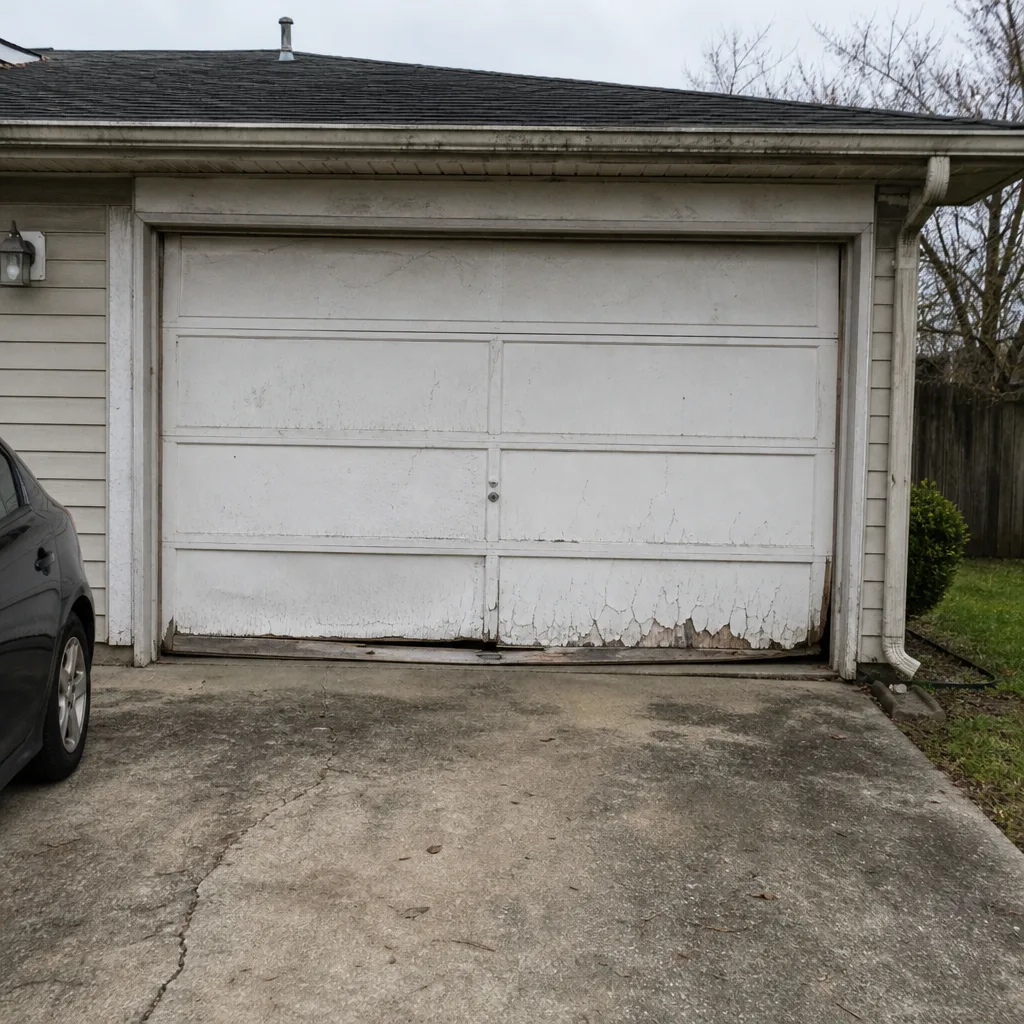 Before
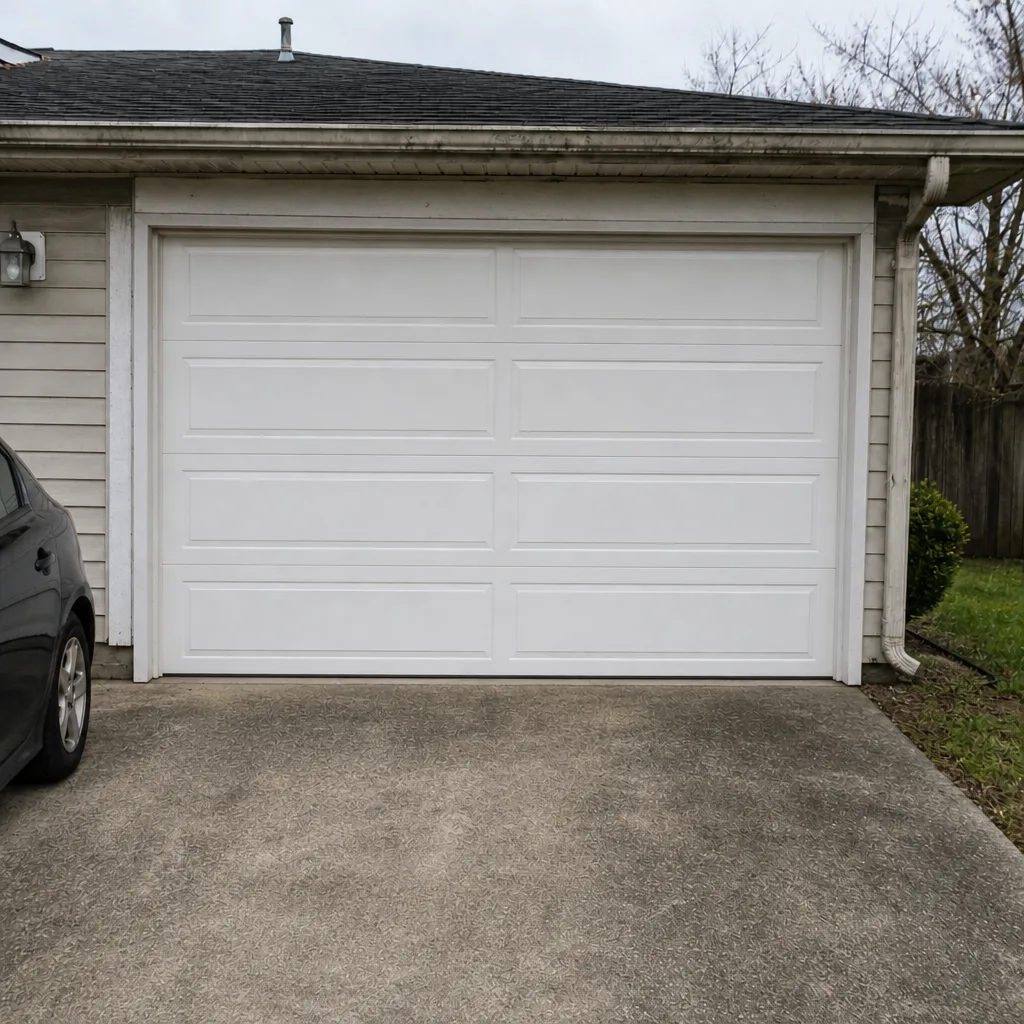 After
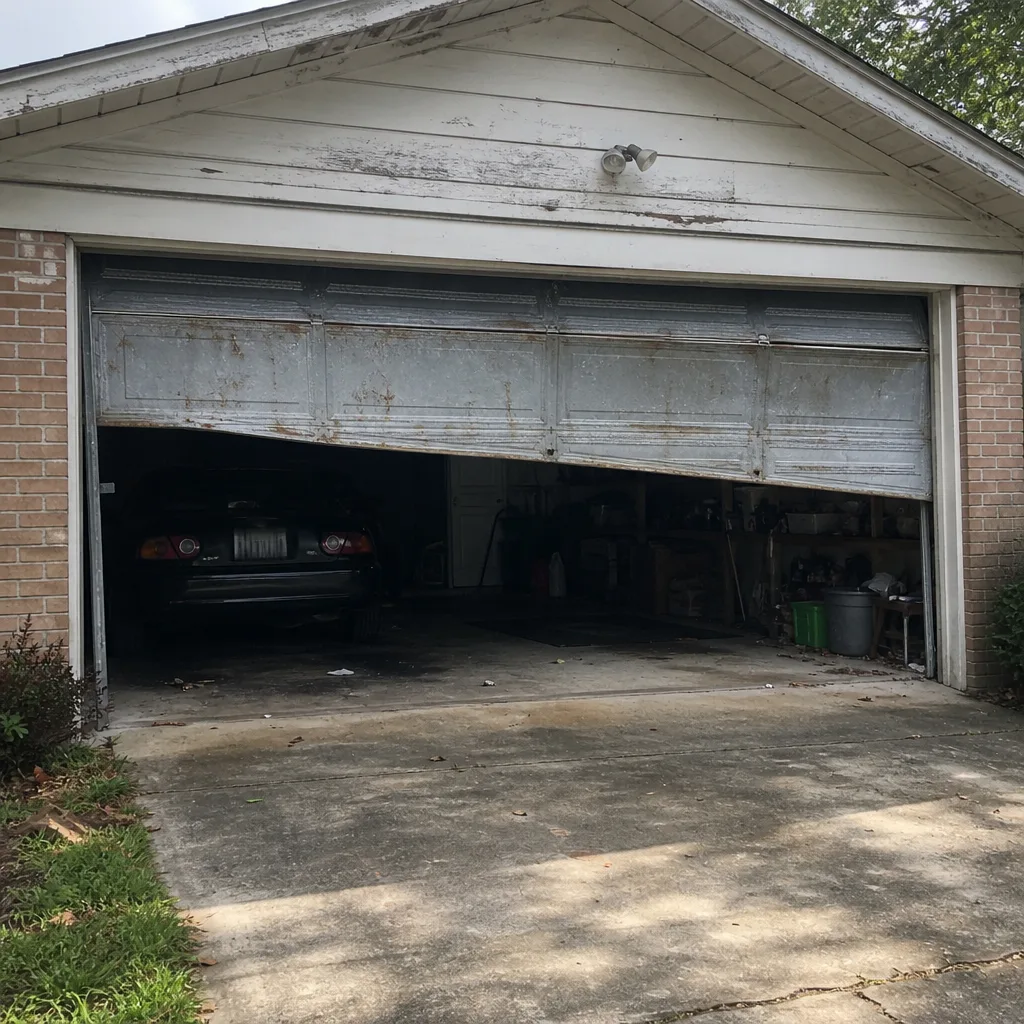 Before
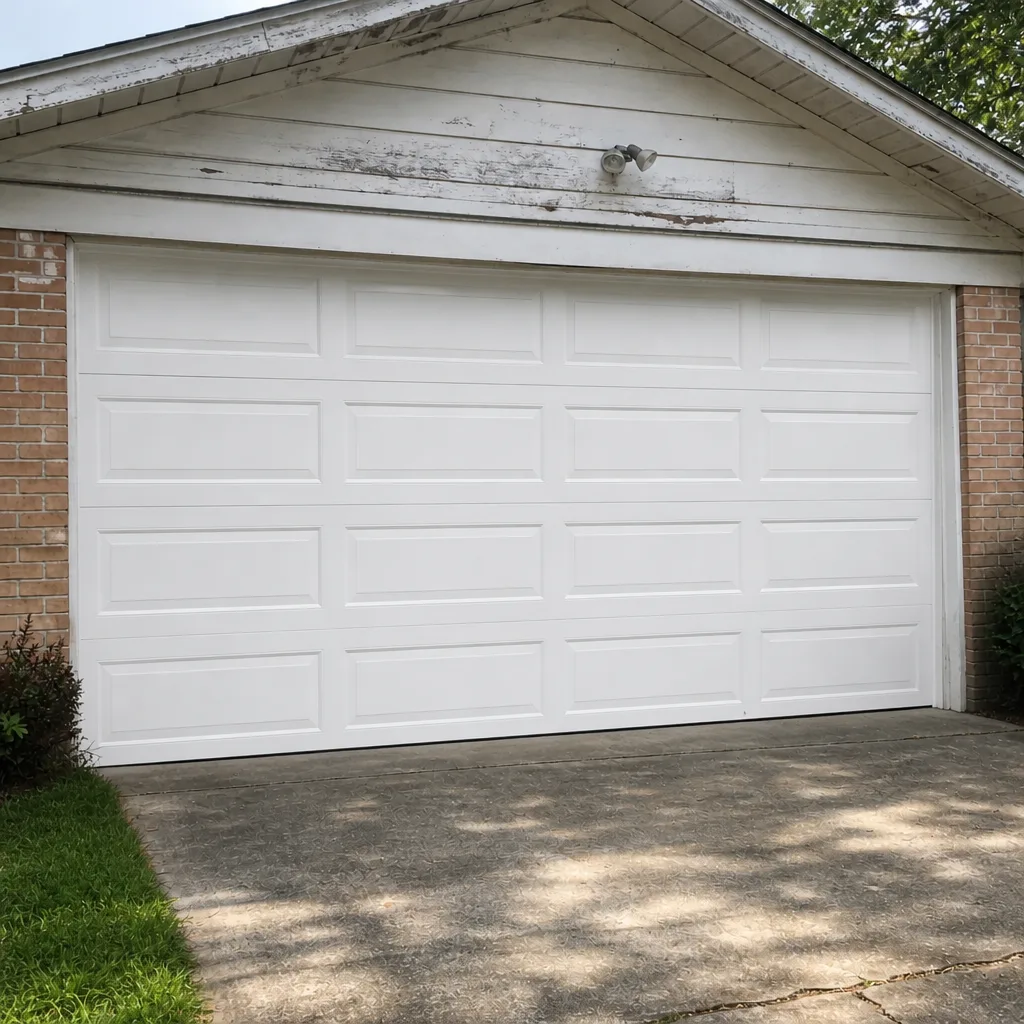 After
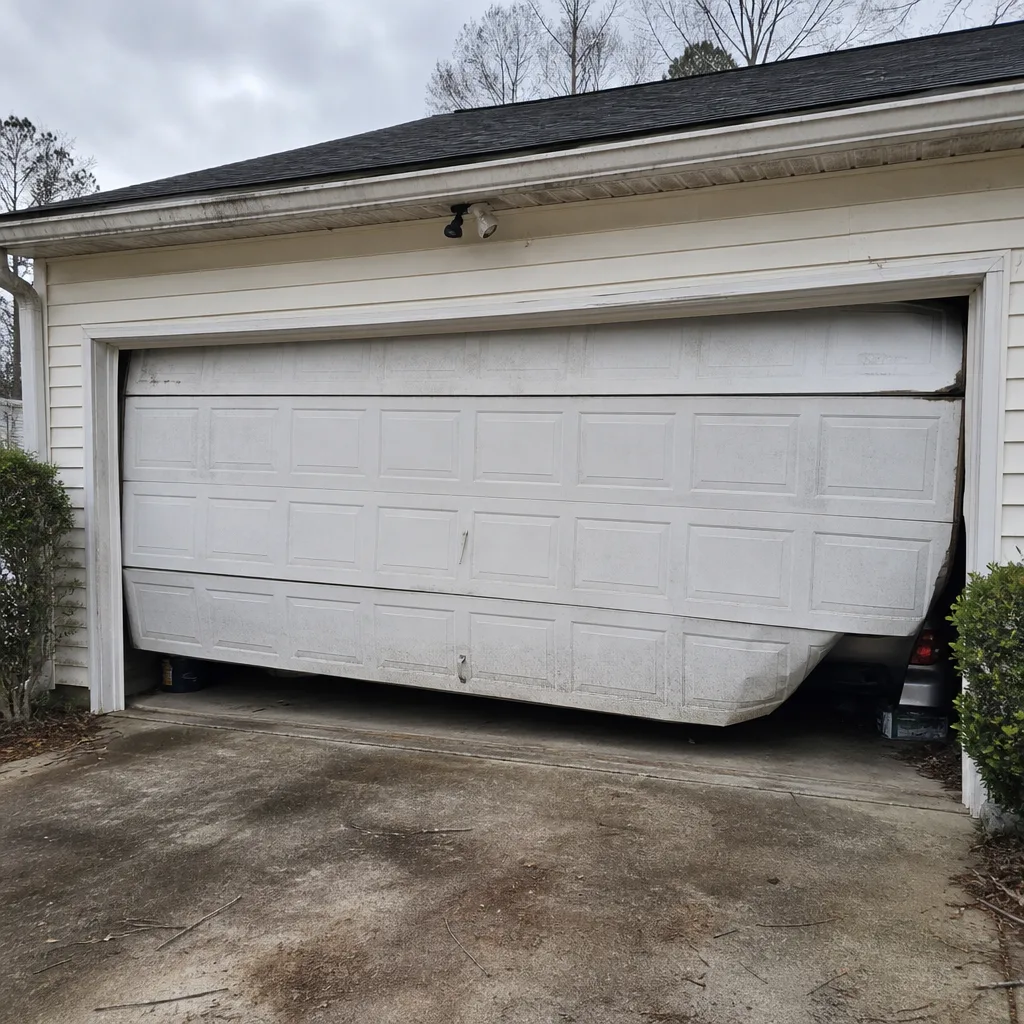 Before
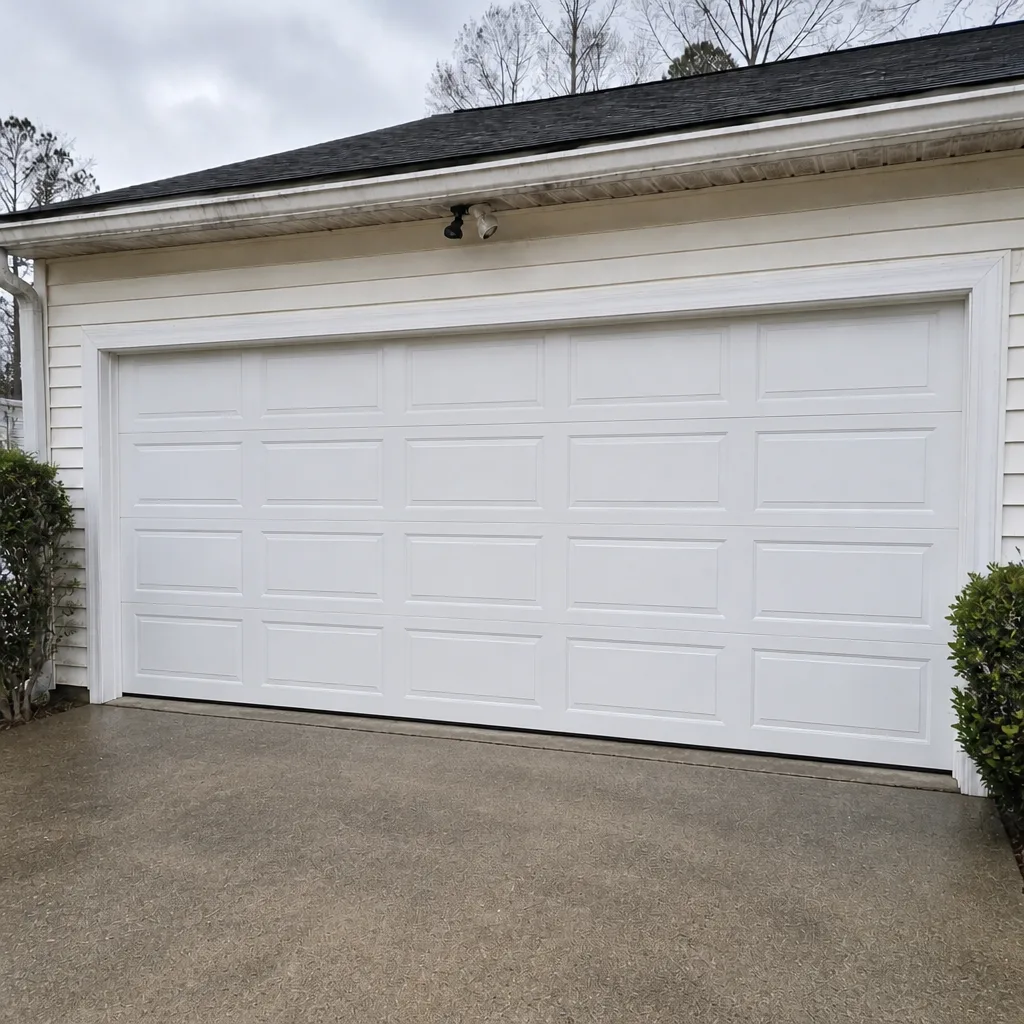 After
When to Call a Professional
Call a professional when the door or opener has failed unexpectedly, when you’re comparing brands before an installation, or when a door that worked fine last week struggles to open or close. The garage door spring and opener are both equipment that can injure an untrained person, so we don’t recommend DIY repair on either. A licensed, insured technician can diagnose the issue, explain what needs replacing, and quote the price before work starts. We provide free estimates in North Charleston, and our technicians have up to 13 years of experience with all eight brands we serve. Whether the job is a panel, a spring, an opener, or a full replacement, we measure first, quote second, and install third. A call now avoids a stuck door later.
A stuck door isn’t always an emergency, but it always deserves a prompt look. If the door is stuck open, that leaves the contents of the garage visible and the house less secure. If it’s stuck closed, you’re parking outside. Both are reasons to call rather than wait. Call (888) 655-8807. We answer 24/7. Fast dispatch from 7am to 7pm, Sunday through Friday. A call outside dispatch hours is booked into the next opening, Sunday through Friday, 7am to 7pm.
Frequently Asked Questions
There’s no single best brand, but Clopay and Amarr are the strongest general picks for most North Charleston homes because they balance local parts availability, finish warranty coverage suited to a humid climate, and long-term serviceability. Wayne Dalton is common on builder homes and worth knowing for service even if you don’t choose it. LiftMaster and Chamberlain are the most common opener brands locally.
No, and it usually shouldn’t. Door hardware is standardized enough that any door on the eight-brand list works with any of the major opener brands. Pick the door by size, finish and budget, then pick the opener by smart-home support and parts availability.
Brands sold almost entirely through catalog or mail order are the hardest to source locally. Clopay, Amarr, Wayne Dalton, and the major opener brands (LiftMaster, Chamberlain, Genie, Craftsman) all have strong parts networks that reach the region. If a quote sheet lists a brand that’s not widely installed locally, ask where the replacement panel would come from.
Yes. Painted steel doors face steady humidity in North Charleston, so a finish warranty that doesn’t explicitly cover humid climates is worth less than its headline term. Look for a warranty that names humid conditions as a covered event and read the exclusions for installation and salt-spray language.
Both sit in the same ownership family and use similar smart-home technology, so the practical difference is mostly support and model availability. LiftMaster openers are often paired with Clopay doors on installations, and both brands have wide parts networks. Genie’s Aladdin Connect is a solid alternative, and Craftsman is the most universally serviceable but least smart-home-ready choice.
We don’t recommend it. Torsion springs and the opener assembly carry a lot of stored force, and an untrained installation can injure you or damage the door. A professional installation also usually comes with a better warranty path and a correctly sealed bottom and side trim, which matter in this climate. If you’ve already bought a door and need it installed, call us for a free estimate.
For any of these questions, call (888) 655-8807 for an exact quote. Estimates are free.
The Bottom Line
The best garage door brand for a North Charleston home depends less on the logo and more on three things: how fast a part can arrive if it breaks, whether the finish warranty actually covers a humid climate, and whether your opener leaves room to upgrade later without replacing everything. Steel gauge and core construction decide how the door performs, and a well-sealed install matters more than a fancier panel. Clopay and Amarr are the strongest general picks here, with Wayne Dalton a common builder brand worth knowing, and LiftMaster and Chamberlain leading on the opener side. Brand-agnostic service means you get the door that fits your house, not the one a single-dealer catalog happens to sell.
Written by the team at Rainier Garage Door Repair.